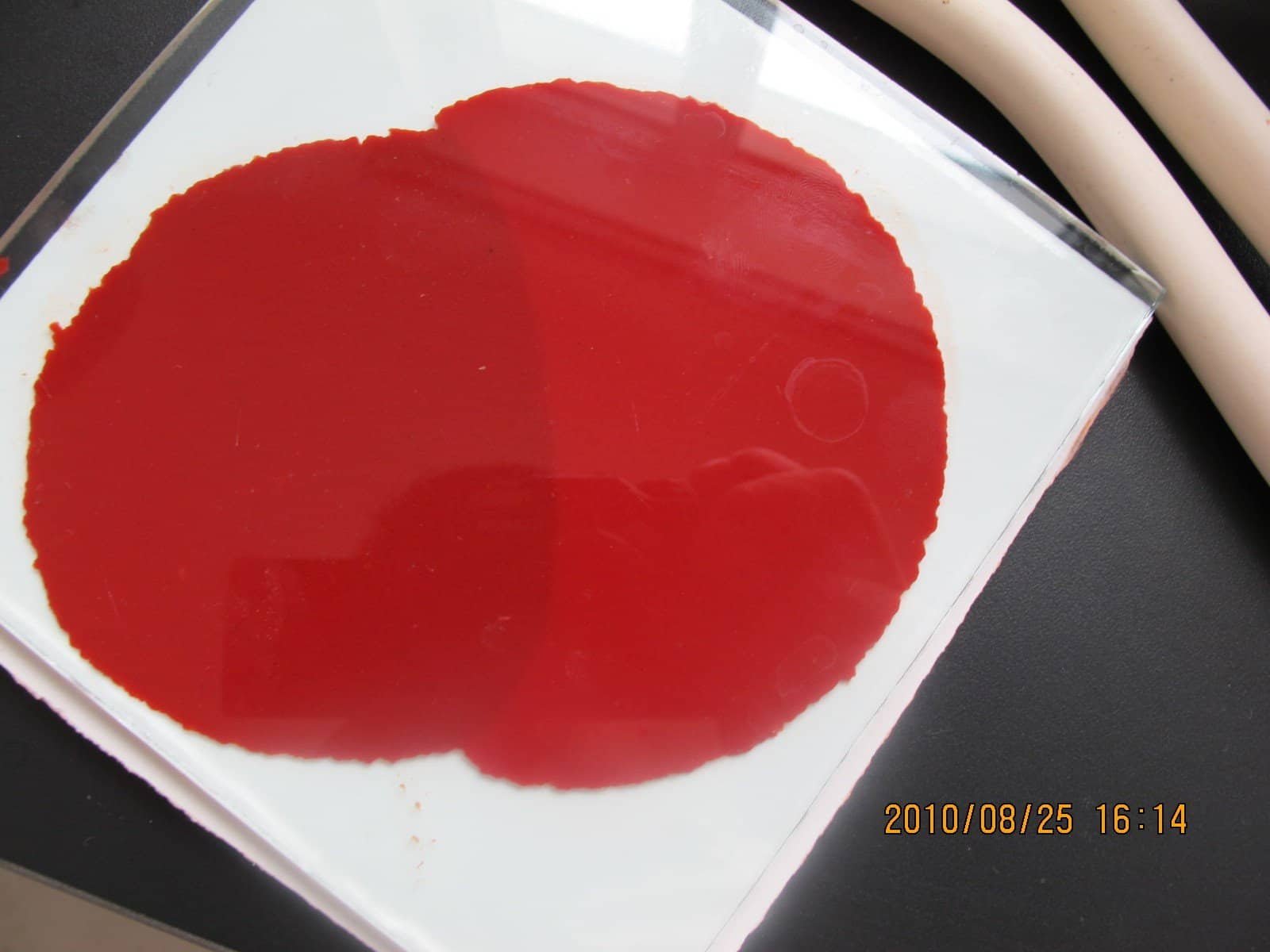
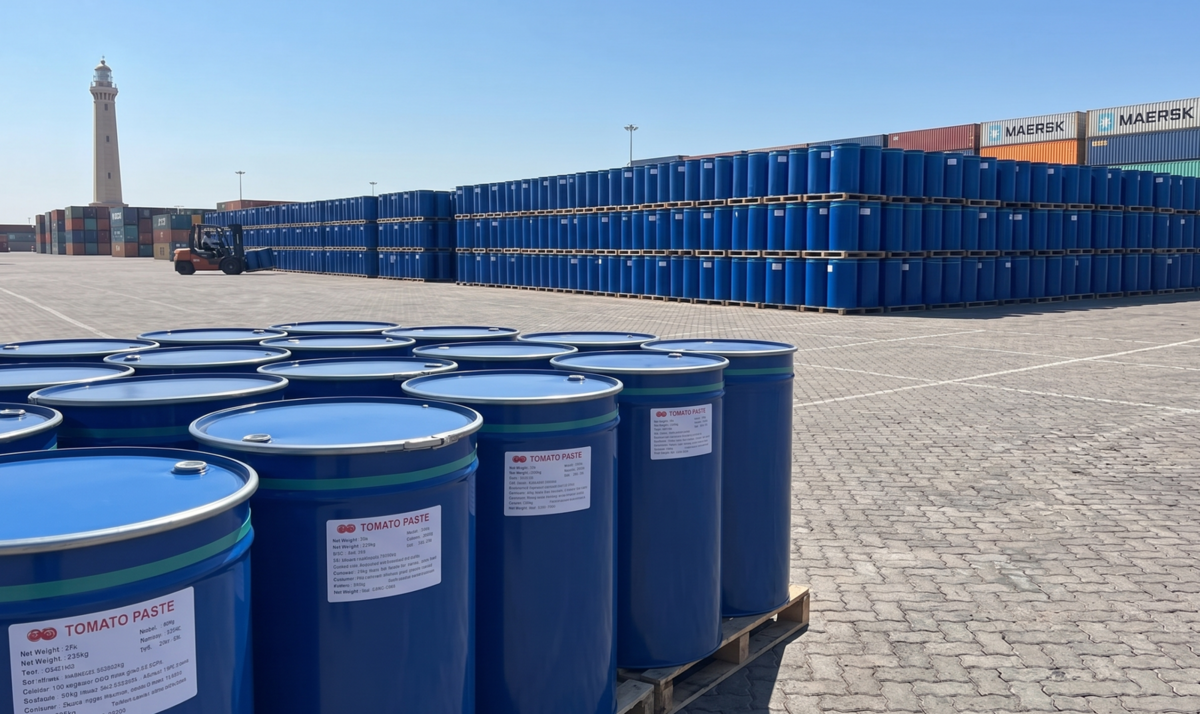
In the international bulk food ingredient trade, industrial-grade drum tomato paste serves as a critical raw material. Its technical specifications, processing methodologies, and logistical risk controls directly impact the production safety and final product quality of downstream food processing plants. This guide provides a comprehensive, systematic analysis of the core technical benchmarks and global logistics standards for drum tomato paste.
1. Core Packaging Specifications & Parameters
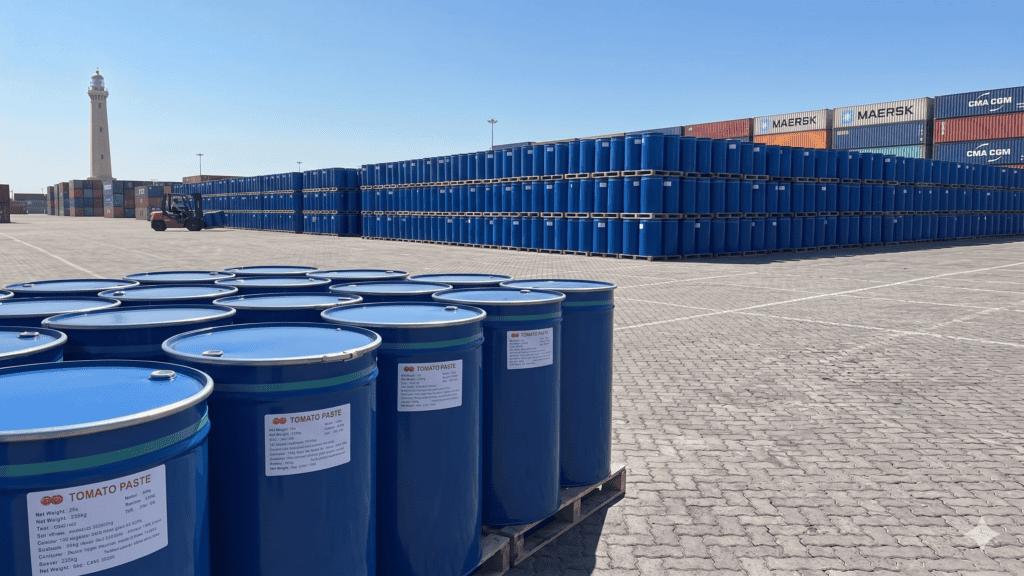
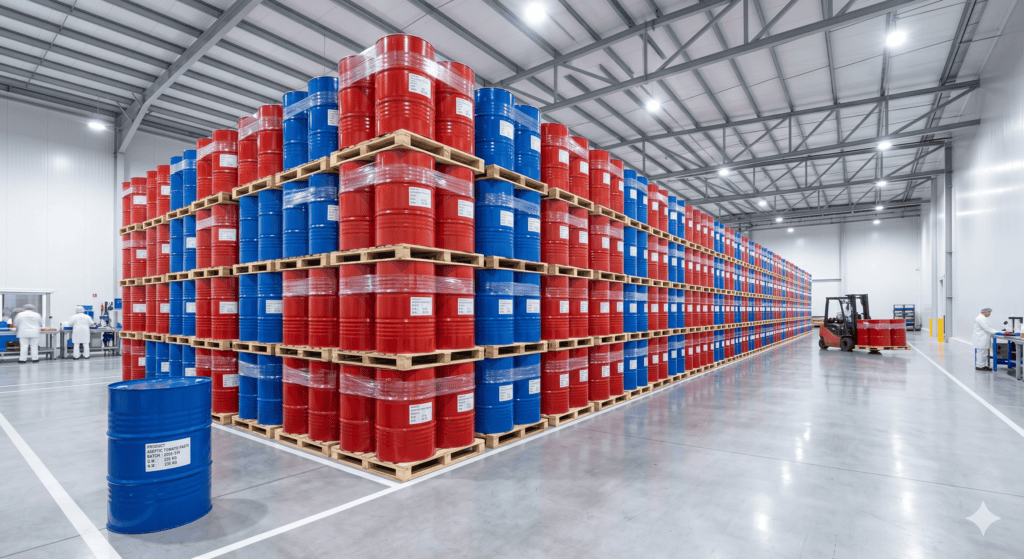
The absolute workhorse of the industrial tomato paste trade is the Aseptic Bag in Tight-Head Steel Drum packaging system. Its design is strictly engineered to support high-efficiency, ultra-secure, large-scale B2B supply chains.
- Standard Capacity: 220 Liters (220L / 55 Gallons).
- Standard Net Weight: Typically 235 kg to 240 kg per drum. The exact net weight fluctuates slightly within this range based on the density variations caused by different concentrations (36-38% vs. 28-30%) and processing methods (Hot Break vs. Cold Break).
- Physical Dimensions: Outer diameter of approximately 585 mm; height of approximately 890 mm – 900 mm.
- Drum Configuration (Tight-Head): Designed as a tight-head (closed-top) drum. The top is permanently fixed and features two round, threaded bungholes (one large, one small) equipped with high-airtightness industrial seals to completely isolate the product from external air and impurities.
- Reinforcement Craftsmanship (W-Design Corrugations): The drum body is engineered with strengthened rolling hoops (W-design corrugations). This design drastically enhances the vertical load-bearing and impact resistance of the steel drums during stacking, while allowing smooth rolling and manual handling across factory floors or shipping docks.
- Bulk Formats (Supplementary): While 1,000-liter and 1,300-liter Wooden Bins/IBCs exist in the market, the 220L tight-head steel drum remains the global industry standard with the highest compatibility for food-processing equipment worldwide.
2. Industry Packaging Comparison: Aseptic Drum vs. Tin Can vs. Sachet
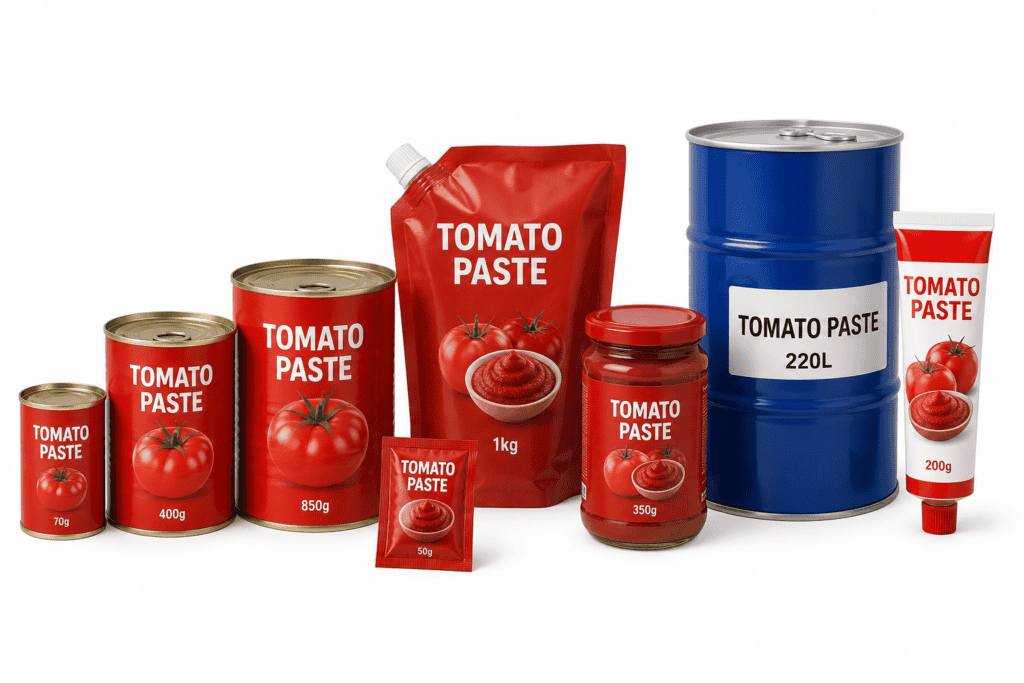
In B2B procurement, a buyer’s packaging choice is fundamentally dictated by their position and role within the downstream supply chain:
| Dimension | Industrial Aseptic Drum | Retail/Catering Tin Can | Flexible Sachet / Pouch |
| Main Capacities | 220L (Approx. 240kg) | 70g, 400g, 800g, 3kg, 4.5kg | 50g, 70g, 400g, etc. |
| Target Customers | Food Manufacturers (B2B Raw Material) Reprocessed into ketchup, pizza sauce, sauces, and canned foods. | Horeca (Catering) & Retail Direct use by restaurants or placed on supermarket shelves. | Fast Food Chains & Retail Single-serve condiments or consumer-end convenience meals. |
| Packaging Cost Ratio | Extremely Low (Calculated as packaging cost amortized per kilogram of tomato paste). | High (Tinplate is expensive; packaging accounts for a massive chunk of shipping weight). | Medium (Multi-layer composite films, optimized for portability). |
| Logistical Efficiency | Extremely high; optimized for 20ft FCL ocean freight and mechanized forklift handling. | Lower; requires heavy palletization or tedious manual carton handling. | Lower; highly vulnerable to crushing/leaks, requires multi-layered outer carton protection. |
3. Processing Methodologies & Classifications (Hot Break vs. Cold Break)
The primary classification of industrial tomato paste hinges on the pre-heating and crushing temperature, which fundamentally dictates the product’s final application and viscosity profile:
Hot Break (HB)
- Processing Principle: Fresh tomatoes are chopped and instantly heated to above 85°C – 90°C. This rapid thermal shock immediately inactivates the endogenous pectolytic enzymes, perfectly preserving the natural high-molecular-weight pectin.
- Technical Characteristics: Exceptionally high viscosity. The typical Bostwick consistency value ranges between 2.0 cm to 5.5 cm/30 s.
- Application Scenarios: Primarily utilized for manufacturing Tomato Ketchup, Pizza Sauces, and thick savory sauces. It allows downstream processors to achieve excellent suspension, texture, and coatability without over-relying on artificial thickeners.

Cold Break (CB)
- Processing Principle: Fresh tomatoes are crushed at lower temperatures (65°C – 75°C), allowing the pectinase enzymes to partially break down the pectin before the concentration stage.
- Technical Characteristics: Lower viscosity (higher fluidity). However, its Color (A/B value) and Flavor profile are noticeably brighter and closer to fresh, natural tomatoes than Hot Break paste.
- Application Scenarios: Heavily used for reconstituting Tomato Juice, multi-ingredient retail canned sauces, and blended soup bases.
4. Key Technical Specifications (Essential for Spec Sheets)
When global B2B procurement managers evaluate a supplier, the following technical metrics serve as the universal language for determining product grading and quality tiers:
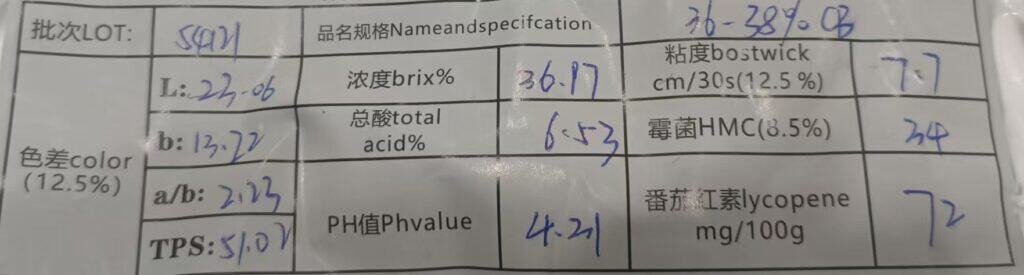
- Brix (Soluble Solids Content): The most dominant commercial trading grades are 28-30% and 36-38%. The 36-38% grade consists mostly of Cold Break (CB) paste; due to its ultra-high concentration, it yields substantial savings on international ocean freight per unit of pure tomato solids.
- Bostwick Consistency: Measured by tracking the flow distance (in centimeters) of the paste inside a standard Bostwick consistometer over 30 seconds. Smaller numbers indicate a thicker, more viscous paste. HB is typically < 5.5 cm, while CB generally lands between 7.0 and 11.0 cm .
- Color (A/B Value via Hunter Lab): A spectrophotometric measurement of lycopene intensity. Premium international standards require an A/B ratio of 2.1 or 2.2. A higher ratio indicates a vibrant, brilliant red color without dull, brownish undertones.
- HMC (Howard Mold Count): The definitive metric used to audit raw material freshness and hygiene. Depending on the custom regulations of the importing country (e.g., FDA, EFSA), the global standard demands 30 to 50 .
- pH Value: Typically ranges tightly between 4.1 and 4.4 . Tomatoes are naturally acidic; maintaining the pH within this threshold is vital to preventing microbial growth.
- Lycopene Content: Generally specified at 50 mg-100 g.
5. Shelf Life, Storage, & SOP Solutions for Top Industry Pain Points
1. Shelf Life & Storage Protocols
- Standard Shelf Life: 24 months from the date of manufacture under proper, undisturbed aseptic sealing.
- Ambient Storage: Store in a cool, dry, well-ventilated warehouse (recommended ambient temperature 20°C .
- Industry Best Practice (Cold Storage): Although the packaging is completely aseptic, prolonged exposure to temperatures above 30 °C riggers the Maillard Reaction, which degrades lycopene (causing the color to darken/brown) and sours the flavor profile. To lock in pristine freshness and peak color, premium buyers prefer storing the drums in cold storage at 0°C – 4°C .
2. Three Major Industry Pain Points & Standard Operating Procedures (SOP)
Industrial buyers dread raw material quality incidents. We enforce rigorous SOPs across production and logistics to eliminate these risks:
Pain Point 1: Aseptic Bag Breakage & Swelling
- Root Cause: Intense vibrations during ocean transit cause friction between the inner aseptic aluminum foil bag and the steel drum’s interior walls. Any micro-puncture allows oxygen ingress, causing the high-sugar paste to ferment and swell within days.
- Our SOP Solution:
- Reinforced Bag Thickness: We exclusively utilize heavy-duty, multi-layered composite aseptic aluminum bags with ultra-high puncture resistance.
- Internal Drum Deburring: Every steel drum undergoes rigorous interior grinding and deburring to guarantee completely smooth internal surfaces.
- High-Strength Container Bracing: We reject loose, unbraced loading. Drums are strapped tightly into 4-drum block units. All remaining void spaces in the container are filled with professional industrial air bags, locking the cargo completely in place to eliminate transit friction.
Pain Point 2: Black Specks
- Root Cause: Prolonged production runs can cause localized overheating in pipelines, generating charred particles. Alternatively, poor washing lines leave behind tomato stems or sepals, resulting in black micro-specks that ruin the visual purity of high-end consumer ketchup.
- Our SOP Solution:
- Dual High-Precision Filtration: Right before aseptic filling, the paste passes through an inline, high-mesh dual stainless-steel filtration system to intercept any trace burnt particles or botanical debris.
- Strict CIP Cleanings: We enforce mandatory, scheduled Clean-In-Place (CIP) cycles and steam flushes across the entire line during the processing season to prevent carbon buildup in pipelines.
- AI Optical Sorting: Processing lines are equipped with advanced AI vision sorters to automatically eject raw tomatoes showing mold spots, black scars, or blemishes before crushing.
Pain Point 3: Elevated Howard Mold Count (HMC)
- Root Cause: Rotten tomatoes accumulating or deteriorating at the factory gates during peak harvest, or inefficient washing setups, leading to high HMC values that fail strict customs clearance.
- Our SOP Solution:
- Traceable Farming & Rapid Processing: We establish strict contract-farming harvest windows. Tomatoes are transported from field to factory and crushed within a strict 24-hour window to completely halt mold development.
- Triple-Stage Surfing Wash: Tomatoes undergo a composite cleaning process involving flotation surfing, high-pressure sprayers, and rotary brush rollers to strip away all field dirt and hidden mold.
- QC Veto Authority: Every incoming truck is sampled prior to unloading. If the raw rot rate crosses our strict threshold, the entire truckload is rejected immediately, ensuring that our final product HMC remains stably 20% or 50%.
6. International Logistics Standards: Shipping & Container Loading
As a high-density heavy cargo, drum tomato paste demands meticulous loading standards to prevent container overweight issues, shifting, or crushing.
- Container Specifications: Exclusively shipped via 20ft FCL (Full Container Load). Shipping lines generally reject 40ft containers for this cargo because the weight limit is reached long before the volume is filled, making 40ft containers highly prone to being dangerously overweight.
- Exact Loading Capacities:
- Loose Loading with Heavy-Duty Strapping: Exactly 80 drums per 20ft container. Drums are strapped in 4-drum clusters (4-drum non-pallet unit packs), completing 20 clusters per container. Total net product weight is approximately 19.2 Metric Tons.
- Palletized Loading (With Pallets): Exactly 80 drums across 20 pallets per 20ft container. Every 4 drums are strapped and shrink-wrapped onto a heavy-duty wooden or plastic pallet. This arrangement allows destination buyers to immediately unload with forklifts, drastically cutting down manual labor costs and turnaround times.