Key Takeaways
- Tomato paste quality depends on raw materials, Brix level, lycopene content, and processing methods.
- High-quality paste typically features 28–30°Bx with strong color and consistency.
- Industrial buyers should evaluate both technical parameters and application performance.
- Consistent quality is more important than just low price.
1. Introduction
Tomato paste quality is not defined by a single factor.
👉 It is the result of multiple parameters working together.
Understanding these factors helps buyers:
- Select the right supplier
- Optimize production
- Ensure consistent product performance
2. Raw Material Quality (Foundation)
Everything starts with fresh tomatoes.
Key factors:
- Brix level of raw tomatoes
- Variety and origin
- Ripeness at harvest
👉 High-quality tomatoes provide:
- Better flavor
- Higher processing efficiency
- More stable final product
3. Brix Level (Concentration Core)
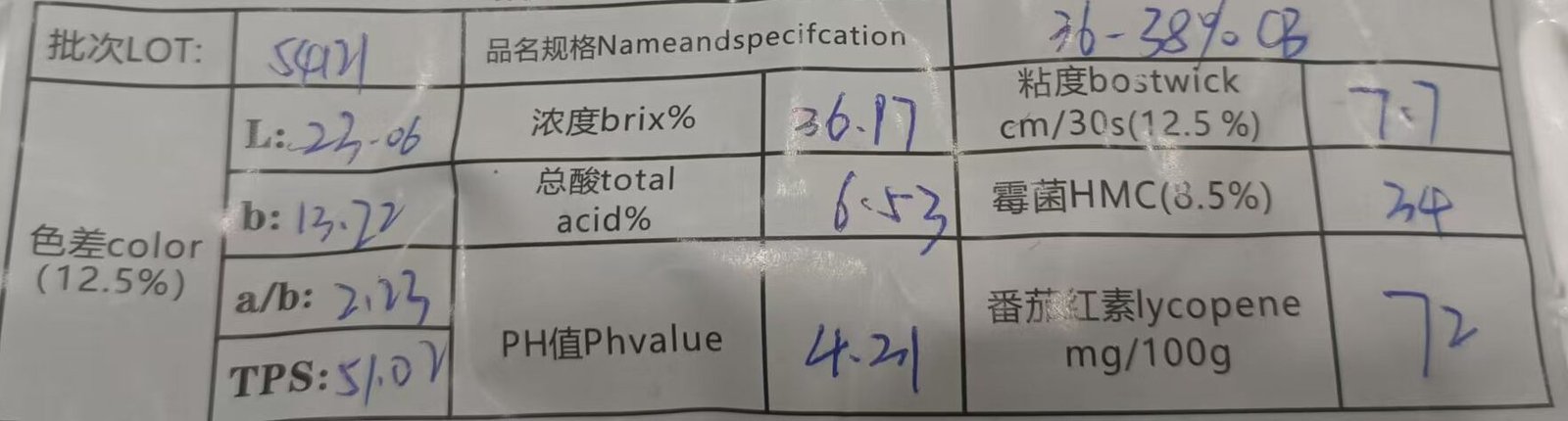
Brix determines how concentrated the tomato paste is.
Brix (°Bx)=Total MassSoluble Solids×100%
Typical ranges:
- 22–24°Bx → Standard
- 28–30°Bx → Most common
- 36–38°Bx → High concentration
👉 Impact:
- Higher Brix → thicker consistency
- Lower usage in production
- Better cost efficiency
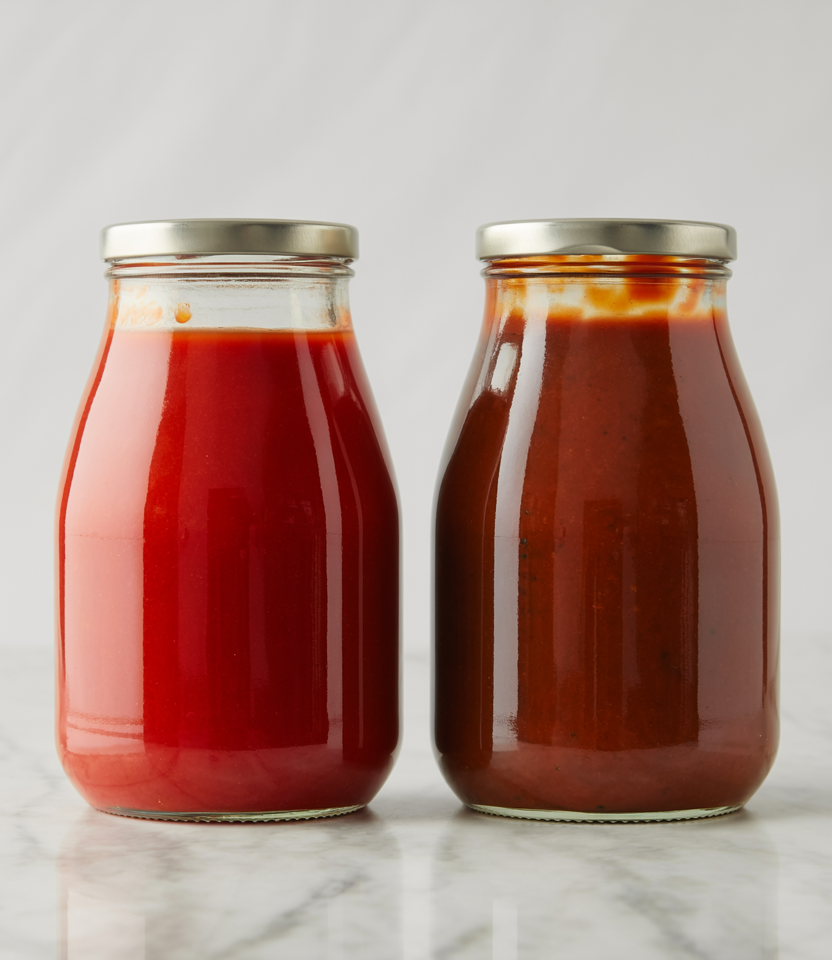
4. Lycopene Content (Color & Appeal)
Lycopene affects the visual quality of tomato paste.
Importance:
- Determines redness
- Influences consumer perception
- Indicates raw material quality
👉 High lycopene → deeper red color → higher market value
5. Viscosity (Texture & Performance)
Viscosity refers to how thick or flowable the paste is.
Why it matters:
- Thick paste → suitable for sauces
- Smooth flow → easier processing
👉 Important for:
- Food factories
- Sauce production
6. Color Index (a/b Value)
The a/b ratio measures color quality.
- “a” = redness
- “b” = yellowness
👉 Higher ratio = better red color
👉 This is widely used in professional quality evaluation.
7. Processing Technology
How tomatoes are processed also affects quality.
Key factors:
- Evaporation method
- Temperature control
- Sterilization process
👉 Good processing ensures:
- Nutrient retention
- Stable consistency
- Longer shelf life
8. Packaging & Storage
Packaging influences product stability.
Common options:
👉 Proper packaging:
- Prevents contamination
- Extends shelf life
- Supports transportation
9. Consistency & Supply Stability
For bulk buyers, consistency is critical.
👉 Important factors:
- Stable Brix levels
- Uniform color
- Reliable supply chain
❗ Inconsistent quality can disrupt production.
10. How to Evaluate Tomato Paste Quality
Buyers should check:
- Brix level
- Lycopene content
- Color (a/b value)
- Viscosity
- Packaging options
👉 And most importantly:
Consistency across batches
11. Common Mistakes to Avoid
❌ Focusing only on price
👉 May result in unstable quality
❌ Ignoring technical parameters
👉 Leads to poor performance
❌ Not testing samples
👉 High risk in bulk orders
12. Conclusion
High-quality tomato paste is defined by a combination of concentration, color, texture, and raw material quality.
For buyers, the best approach is:
- Understand key parameters
- Match product to application
- Work with reliable suppliers
13. Get a Quote
Looking for consistent, high-quality tomato paste for bulk supply?
- Stable Brix levels
- High lycopene content
- OEM packaging available