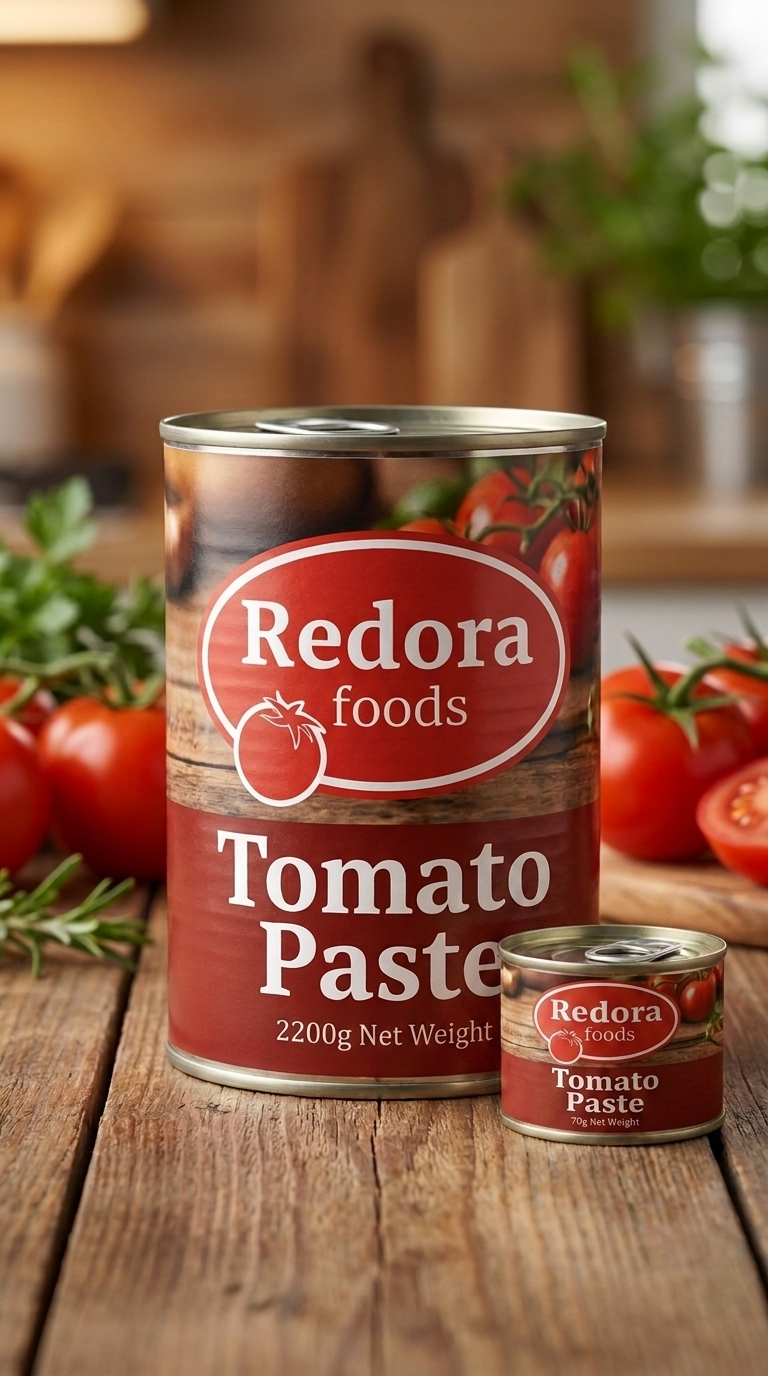
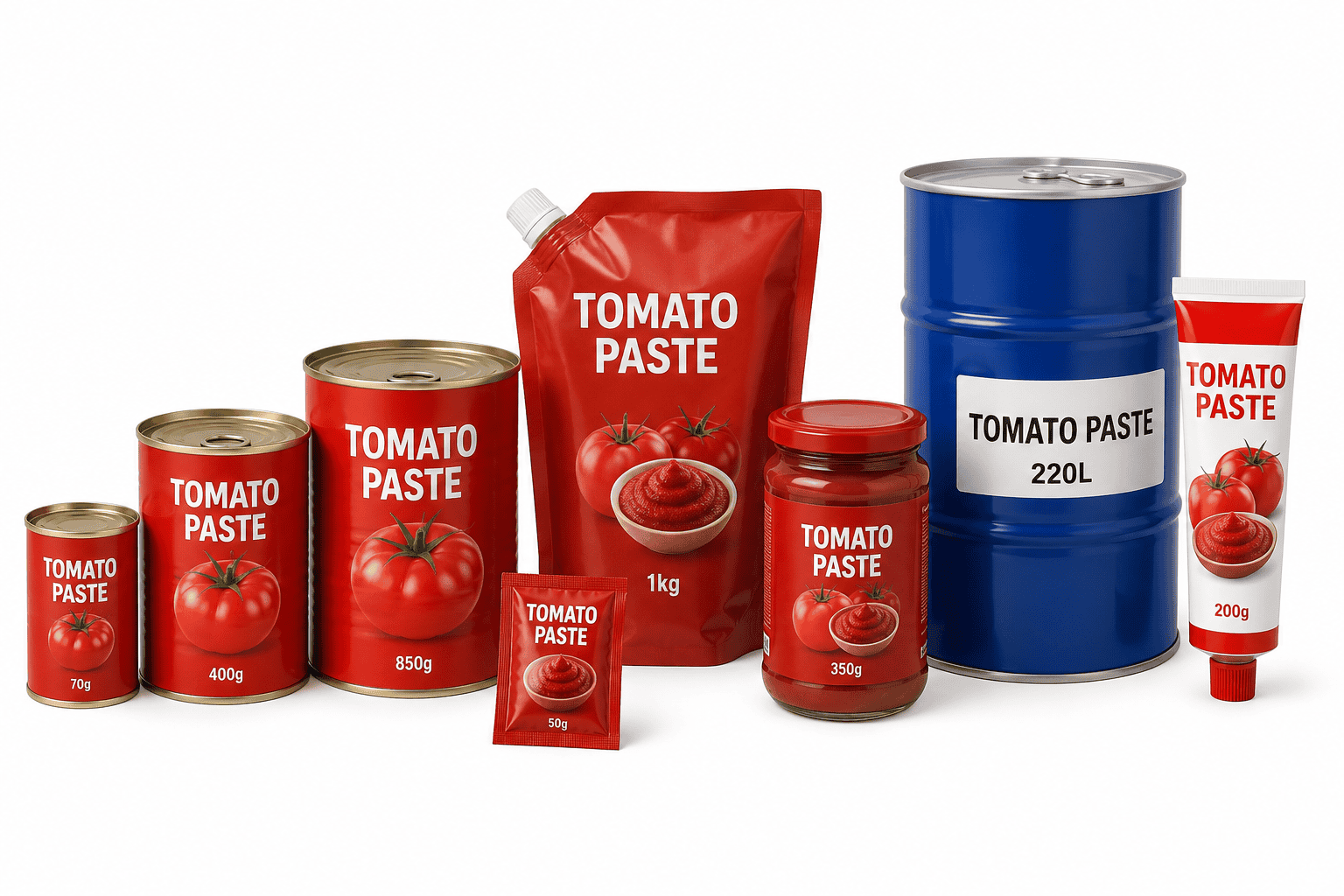
Tomato paste is available in multiple packaging formats designed for different usage needs, from household cooking to industrial food manufacturing. Choosing the right packaging type is important because it directly affects cost, storage efficiency, shelf life, and ease of use.
In general, tomato paste packaging can be divided into five main categories: cans, pouches, glass jars, industrial drums, and tubes. Each format serves a specific market segment, including retail consumers, foodservice operators, and large-scale industrial buyers.
This guide provides a clear overview of each packaging type and helps you quickly understand which option is most suitable for your application.
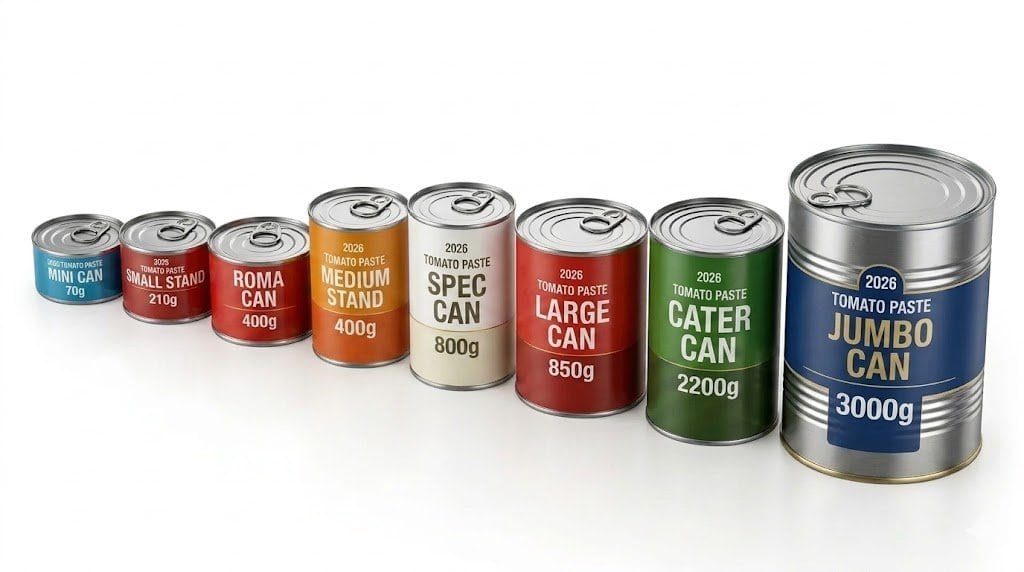
Canned Tomato Paste (Most Common Packaging Type)
Canned tomato paste is the most widely used packaging format in global markets. It is commonly found in supermarkets, restaurants, and institutional kitchens due to its stability and long shelf life.
Common can sizes:
- 70g–210g small cans: Used for single meals or small household cooking
- 400g–850g medium cans: Suitable for family use and small restaurants
- 2.2kg–3kg (A10 cans): Designed for foodservice and catering operations
Canned packaging offers strong protection against light and air, which helps preserve the flavor, color, and nutritional quality of tomato paste for a long period.
Best for:
- Household cooking
- Restaurants and catering services
- Institutional kitchens (schools, hotels, etc.)
Key advantages:
- Long shelf life(24 Months)
- Easy to store and transport
- Widely available in global markets
Cans remain the industry standard due to their balance between convenience, durability, and cost efficiency.
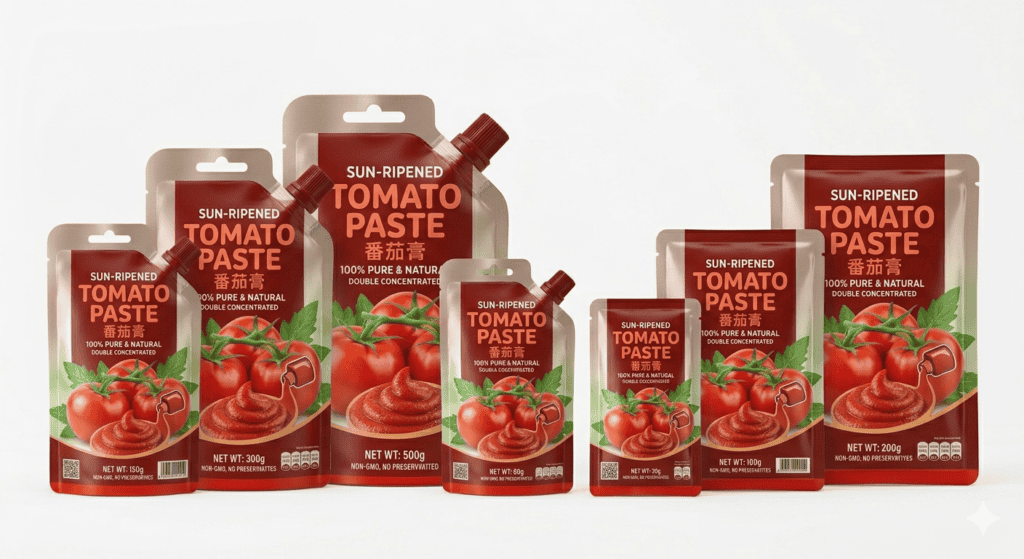
Tomato Paste Pouch Packaging (Flexible & Cost-Efficient Option)
Pouch packaging has become increasingly popular in modern food distribution systems due to its lightweight structure and lower packaging cost.
Common pouch types:
- Sachet (30g–100g): Single-use portion packs
- Stand-up pouch (200g–1kg): Retail and foodservice applications
Unlike cans, pouch packaging is flexible and takes up less storage space, making it highly efficient for logistics and transportation.
Best for:
- Fast food and takeaway businesses
- Retail convenience products
- Budget-conscious markets
Key advantages:
- Lower packaging cost compared to cans
- Lightweight and space-saving
- Reduced material waste
Pouch packaging is especially suitable for markets where convenience and price sensitivity are important.
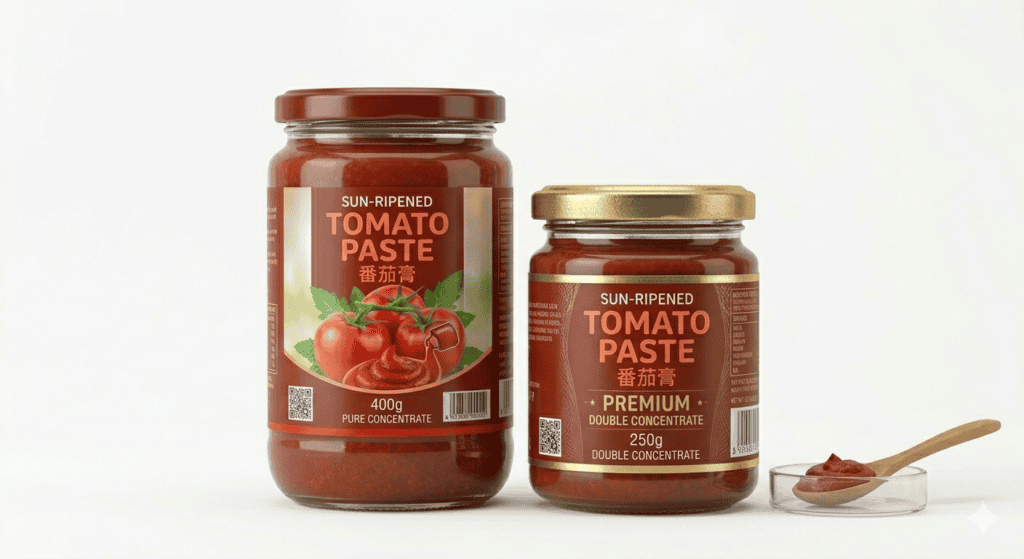
Glass Jar Packaging (Premium Retail Segment)
Glass jar packaging is typically used for premium or specialty tomato paste products. It is commonly found in high-end supermarkets and organic food brands.
Common sizes:
- 200g–500g glass jars
Glass packaging provides strong product visibility and is often associated with higher perceived quality. However, it is heavier and more fragile compared to other packaging types.
Best for:
- Premium retail brands
- Organic or gourmet product lines
- Export markets with strong branding focus
Key advantages:
- Recyclable and environmentally friendly
- Strong branding and product presentation
- Does not absorb odors or flavors
Limitations:
- Higher transportation cost
- Fragile and breakable during shipping
Glass jars are mainly used when brand positioning is more important than cost efficiency.

Industrial Drum Packaging (Bulk Supply for Manufacturing)
Drum packaging is designed for industrial-scale food production and bulk buyers. It is the most cost-efficient format for large-volume tomato paste supply.
Common industrial formats:
These containers are used by food manufacturers who process tomato paste into ketchup, sauces, soups, and other industrial food products.
Best for:
- Food processing factories
- Sauce and ketchup manufacturers
- Large-scale export importers
Key advantages:
- Lowest cost per kilogram
- Long shelf life (up to 24 months under proper conditions)
- Efficient for bulk transportation
Drum packaging significantly reduces packaging waste and improves supply chain efficiency for industrial buyers.
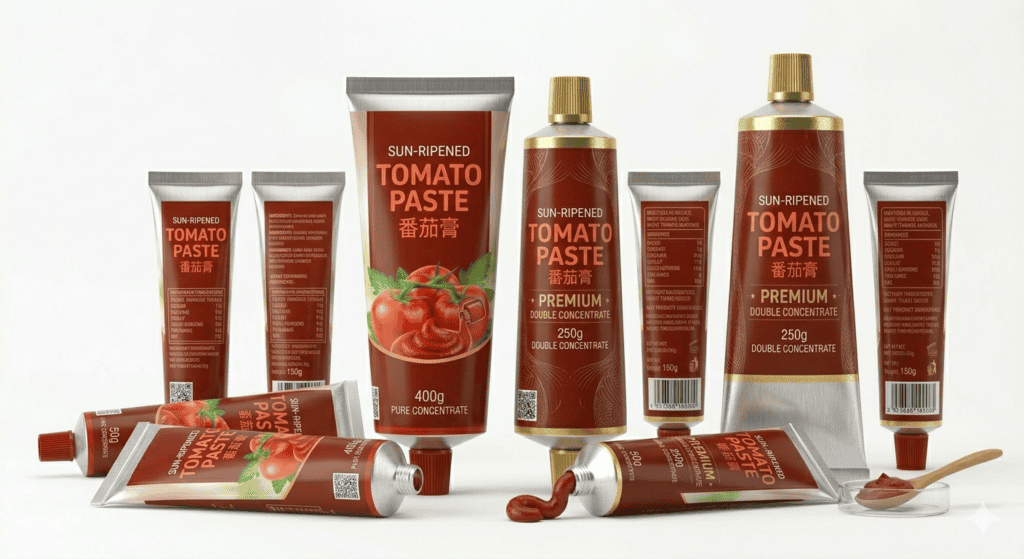
Tomato Paste Tube Packaging (Convenient Household Format)
Tube packaging is a relatively modern format used mainly in retail markets, especially in Europe and parts of the Middle East.
Common sizes:
- 70g–200g aluminum or plastic tubes
Unlike cans or jars, tubes allow users to squeeze out small portions of tomato paste without opening a full container, which helps reduce waste.
Best for:
- Household cooking
- Small portion usage
- Convenience-focused consumers
Key advantages:
- Easy to use and resealable
- Minimizes product waste
- Precise portion control
Tube packaging is ideal for consumers who prefer convenience and freshness in daily cooking.
How to Choose the Right Tomato Paste Packaging
Selecting the right packaging depends on usage scale, cost sensitivity, and storage requirements.
Simple selection guide:
- Household use → Small cans or tubes
- Restaurants & catering → Large cans or pouches
- Low-cost retail markets → Pouches
- Industrial production → Drums or IBC containers
- Premium retail brands → Glass jars
Each packaging type is designed to serve a specific segment of the supply chain, so choosing correctly can significantly improve efficiency and cost control.
Quick Comparison Table
| Packaging Type | Typical Size Range | Best For | Cost Level |
|---|---|---|---|
| Cans | 70g–3kg | Retail & foodservice | Medium |
| Pouches | 30g–1kg | Fast food & convenience | Low |
| Glass Jars | 200g–500g | Premium retail | High |
| Drums | 220L–1000L | Industrial use | Very low |
| Tubes | 70g–200g | Household use | Medium |
FAQ
What is the most common tomato paste packaging?
Canned packaging is the most widely used format, especially the 70g–850g range for retail and foodservice markets.
What packaging is best for restaurants?
Large cans (A10 size) and pouches are commonly used in restaurants due to their balance of cost and convenience.
What is industrial tomato paste packaging?
Industrial packaging usually refers to 220L aseptic drums or 1000L IBC containers used in food manufacturing.
Is pouch packaging cheaper than cans?
Yes, pouch packaging is generally more cost-effective due to lower material and transportation costs.
Conclusion
Tomato paste packaging comes in multiple formats designed for different market needs, from small retail cans to large industrial drums. Understanding these packaging types helps buyers choose the most efficient option based on usage, cost, and storage requirements.
Whether you are a household consumer, restaurant operator, or industrial buyer, selecting the right packaging format can significantly improve convenience and overall cost efficiency.