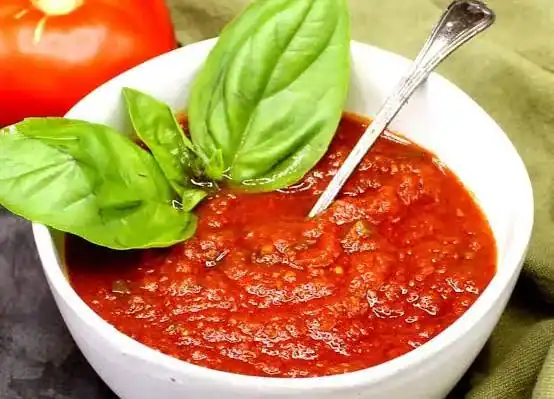
Executive Summary: Formulating sauces for the Southeast Asian market—such as the iconic Filipino sweet spaghetti sauce or complex banana-tomato ketchup blends—presents unique R&D challenges. High sugar and water ratios put immense stress on the structural integrity of the tomato paste. As a primary producer, Redora Food Company understands that procurement and R&D directors do not just buy ingredients; they buy yield, stability, and cost-efficiency.
Before signing your next bulk tomato paste contract, here are the four critical technical questions you must ask your source factory to ensure your production line runs flawlessly.
1. Texture & Syneresis: “Will the Paste Hold Up After Massive Sugar and Water Addition?”
Creating a sweet-profile sauce requires diluting the paste with significant amounts of syrup and water. This extreme dilution can destroy the cellular structure of the sauce, leading to the dreaded “water-sauce separation” (syneresis) on the supermarket shelf.
When evaluating a 28-30% Brix specification, R&D directors must look beyond the Brix level and scrutinize the Bostwick (viscosity) index and the manufacturing process.
To minimize the need for expensive artificial thickeners, we strongly recommend Hot Break (HB) tomato paste over Cold Break (CB) for sweet sauce applications.
| Feature | Hot Break (HB) Tomato Paste | Cold Break (CB) Tomato Paste |
| Processing Temp | High (inactivates pectinase instantly) | Lower (preserves fresh flavor) |
| Pectin Retention | Maximum (High natural viscosity) | Lower (Thinner consistency) |
| Bostwick (cm/30s) | Typically 3.0 – 5.0 cm | Typically 6.0 – 9.0 cm |
| Best For… | Ketchup, Sweet Pasta Sauces, Heavy Sauces | Pizza Sauce, Tomato Juice, Soups |
The Factory Advantage: Our Hot Break processing lines are engineered to maximize natural pectin retention, ensuring your final sauce maintains a thick, robust cling without weeping, even after heavy syrup dilution.
2. Color Retention: “Will the Sauce Turn Dark or Yellow After Boiling?”
In the Southeast Asian QSR (Quick Service Restaurant) and FMCG sectors, visual appeal is paramount. A vibrant, appetizing red color triggers appetite and brand loyalty. However, cooking tomato paste with high sugar content triggers the Maillard reaction, which can quickly turn a vibrant red sauce into an unappetizing dark or yellowish-brown paste.
To guarantee your sauce remains visually striking, you must demand strict color metrics:
- A/B Color Value: Do not accept anything below a 2.1. We strictly monitor our production to ensure A/B values consistently hit 2.1 to 2.2+, guaranteeing a bright red hue.
- Lycopene Content: High lycopene levels naturally protect and enhance the red pigmentation against thermal degradation.
- Batch-to-Batch Consistency: Chain restaurants require absolute standardization. By centralizing our raw material sourcing and utilizing automated optical sorting, we maintain color uniformity across different seasonal batches.
3. Acidity & Flavor Balance: “How Does pH Impact My Sugar Purchasing Costs?”
The soul of a premium Southeast Asian sweet sauce lies in a delicate balance: it must be sweet with a gentle tang, but absolutely never harsh or astringent.
Many procurement managers overlook the direct correlation between the pH / Titratable Acidity of the raw tomato paste and their factory’s sugar expenditure.
- If the bulk paste is too acidic (pH is too low), your R&D team must dump excess sugar into the vats just to neutralize the sourness. This directly inflates your daily sugar procurement costs.
- Furthermore, poorly controlled vacuum evaporation during manufacturing can introduce burnt, caramelized, or metallic off-flavors, which are instantly magnified in a sweet sauce profile.
We meticulously control our concentration temperatures to deliver a smooth, perfectly balanced acidic profile with zero burnt notes, allowing your natural spice and sugar blends to shine while keeping your ingredient costs optimized.
4. Packaging & Shelf Life: “Can the Drums Survive Tropical Climates?”
The journey from the port to a warehouse in Manila or Cebu involves extreme heat and high humidity. These conditions are the ultimate stress test for bulk packaging.
A microscopic tear or compromised seal in a 220L drum can lead to moisture ingress, bacterial fermentation, and catastrophic “swelling” (bloating) of the aseptic bags.
When sourcing, you must verify the packaging integrity:
- Multi-Layer Aseptic Bags: We utilize premium, high-barrier aluminum foil composite aseptic bags engineered to withstand immense external pressure and prevent oxidation.
- Secure Sealing: Our automated aseptic filling lines ensure a hermetic seal that completely isolates the paste from tropical humidity.
- Logistics Efficiency: Operating out of major northern shipping hubs like Tianjin Port ensures that our containers are loaded and dispatched efficiently, minimizing the time your cargo spends sitting under the sun before ocean transit.
Secure Your Supply Chain with Professional Grade Paste
Procuring bulk tomato paste for sweet and complex sauce formulations requires a partner who understands the deep chemistry of your final product. From Bostwick viscosity tuning to securing high A/B color values, Redora Food Companyis dedicated to optimizing your yield and lowering your total production costs.
Ready to upgrade your sauce formulation?
Reach out to our export team today for technical specifications, product samples, and current FOB/CIF pricing for our 28-30% Hot Break tomato paste.