Whether you are auditing a B2B warehouse inventory, managing food service supplies, or simply checking your kitchen pantry, finding a batch of tomato paste always triggers the same questions: Does canned tomato paste expire? How long does it last once opened? How do I know if it has actually gone bad?
Because tomato paste is highly concentrated and naturally acidic, its shelf life behavior is unique. This comprehensive guide breaks down the true shelf life of canned tomato paste, exact spoilage indicators, and professional storage best practices.
1. Unopened Canned Tomato Paste Shelf Life
The short answer is no, unopened canned tomato paste does not strictly expire on the printed date.
The date stamped on the tin is typically a “Best By” or “Best Before” date, which indicates peak flavor and quality guaranteed by the manufacturer, not a hard safety deadline.
Due to its high natural acidity (pH < 4.6) and the commercial hermetic (airtight) sealing process, unopened tomato paste remains safe to consume long after that date has passed.
- In the Pantry / Warehouse: 18 to 24 months beyond the printed date.
- The Safety Reality: If the tin remains completely undamaged, the contents stay sterile and safe to consume almost indefinitely. However, over several years, the vibrant red color, texture, and nutritional value will eventually begin to degrade.
2. How Long Does Opened Canned Tomato Paste Last?
Once the hermetic seal is broken and oxygen hits the paste, the clock starts ticking. Because pure tomato paste contains no chemical preservatives, it becomes vulnerable to mold and oxidation.
In the Fridge: 5 to 7 Days
Once opened, canned tomato paste lasts 5 to 7 days in the refrigerator.
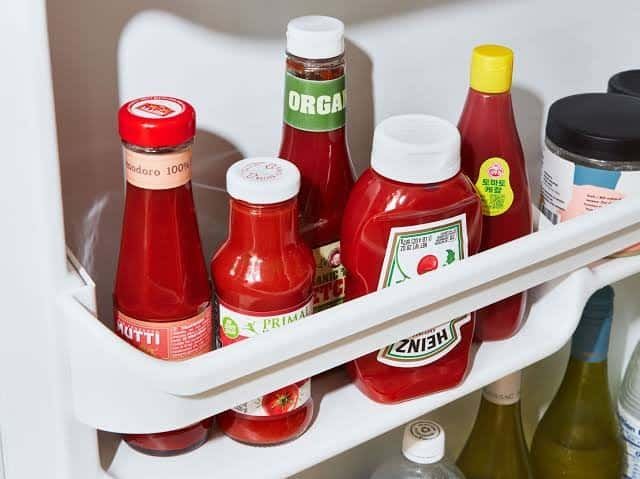
- Crucial Warning: Never store leftover paste directly inside the open metal tin. When oxygen mixes with the internal metal lining of an opened, acidic can, it triggers oxidation. This leaches a harsh, metallic tang into your food and accelerates spoilage. Always transfer unused paste into an airtight glass or plastic container.
In the Freezer: 3 to 4 Months
If you aren’t going to finish the paste within a week, freeze it! It will maintain excellent quality for 3 to 4 months.
The Ice Cube Tray Pro-Tip: Most recipes only call for a single tablespoon of tomato paste. Spoon your leftover paste into an ice cube tray or onto a sheet of parchment paper in individual tablespoon-sized dollops. Freeze them solid, then pop the frozen tomato cubes into a zip-top freezer bag for easy single-tablespoon additions to future recipes!
3. How to Tell If Canned Tomato Paste Has Gone Bad (The Ultimate Checklist)
Don’t rely solely on the calendar—use your senses and inspect the packaging. Spoilage can be detected at three distinct levels: the shipping carton, the individual tin, and the product itself.
① The Carton Inspection: Water Stains & Leaks
For warehouse managers and bulk buyers, you can often spot ruined product before even opening the cardboard shipping box:
- Active Water Stains : If a cardboard master carton shows dampness, soggy patches, or dried dark red/brown water stains, it indicates that at least one interior tin has ruptured, leaked, or rusted through under pressure.
- Moldy Cartons: Moisture from a leaking can will quickly cause mold to spread across the cardboard box, compromising the entire batch.
② The Can Inspection
Never use or open an individual tin that exhibits:
- Bulging or Swelling : This is the ultimate red flag. Swelling means anaerobic bacteria have breached sterilization, creating gases inside. This can be highly toxic.
- Severe Dents or Rust: Deep dents along the top, bottom, or side seams can cause microscopic tears in the inner lining, letting air in.
- The “Spurt” Test: When piercing the can, a tiny suction release of vacuum pressure is normal. However, if it forcefully spurts out liquid or hisses loudly, gas has built up due to active bacterial fermentation.
③ Visual & Texture Clues
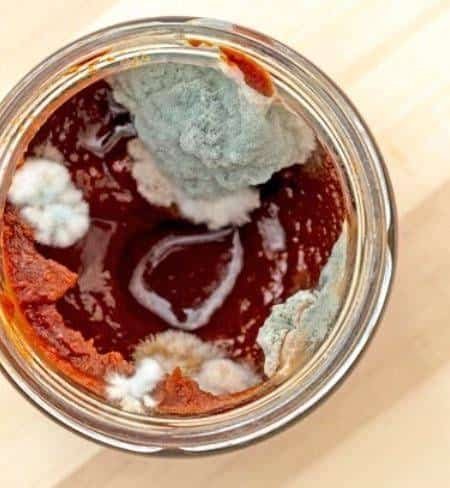
- Fuzzy Mold: White, green, or black fuzz on the surface. Do not just scoop the mold off and eat the rest—mold roots penetrate deep into dense pastes before you can even see them.
- Water Separation & Thinning : High-quality paste should be thick and hold its shape. If it has turned into a runny, watery, or separated liquid mess, micro-organisms have broken down the natural pectins.
- Deep Discoloration: Pure paste darkens slightly on the very top layer when exposed to air (harmless oxidation). However, if the entire batch has turned a dull, lifeless brown or yellowish-black, discard it.
④ Smell & Taste Tests
- The Fermented Alcohol Sniff: If it smells like beer, wine, or vinegar instead of rich tomato, wild yeasts have fermented the natural sugars.
- The “Fizzy” Sensation: If the paste looks okay, but a tiny taste test feels tingly, fizzy, or carbonated on your tongue, it is actively fermenting.
- Harsh Metallic Taste: If left in an open tin too long, it absorbs iron from the lining, resulting in a bitter, chemical metallic flavor.
Summary Table: Canned Tomato Paste Shelf Life At-A-Glance
+-----------------------------------+---------------------------------------------------------+
| Condition / Scenario              | Shelf Life & Action Plan                                |
+-----------------------------------+---------------------------------------------------------+
| Unopened (Pantry / Warehouse)     | 18–24 months past "Best By" date. Safe indefinitely     |
|                                   | if the can is undamaged.                                |
+-----------------------------------+---------------------------------------------------------+
| Opened (In the Fridge)            | 5–7 days. MUST transfer to a glass/plastic container    |
|                                   | to prevent oxidation and metallic taste.                |
+-----------------------------------+---------------------------------------------------------+
| Opened (In the Freezer)           | 3–4 months. Best frozen in single-tablespoon portions.  |
+-----------------------------------+---------------------------------------------------------+
| Carton shows Water Stains         | Discard damaged boxes; inspect internal tins for leaks.  |
+-----------------------------------+---------------------------------------------------------+
| Tin is Swollen, Hissing, or Rusty | Critical Danger. Discard immediately without tasting.   |
+-----------------------------------+---------------------------------------------------------+
Conclusion: Smart Inventory Management Safeguards Profits
In summary, navigating the shelf life of canned tomato paste in 2026 comes down to proactive inspection and proper storage. Unopened tins are incredibly resilient assets that remain safe long past their “Best By” dates, provided the packaging is physically flawless. However, as a warehouse manager or a culinary professional, you must train your team to spot early warning signs—like water stains on shipping cartons, bloated can lids, or a fermented odor upon opening.
By strictly enforcing the 5-to-7-day refrigeration limit in airtight containers and utilizing the freezer portioning trick, you can eliminate food waste, protect your profit margins, and ensure that every dish or production batch delivers the rich, vibrant tomato flavor your customers expect.