Whether you are crafting a classic Italian pasta sauce, a rich winter stew, or a vibrant tomato soup, tinned tomatoes are the ultimate pantry MVP. While some might dismiss canned goods, culinary professionals know a secret: high-quality tinned tomatoes often pack a far more intense, consistent flavor than out-of-season fresh tomatoes.
Here is a comprehensive overview of tinned tomato varieties, how to use them, and how to store them properly.
1. The Tinned Tomato Family: Varieties & Textures
The main difference between the tins on the supermarket shelf comes down to texture and whether they are pre-cooked or seasoned.
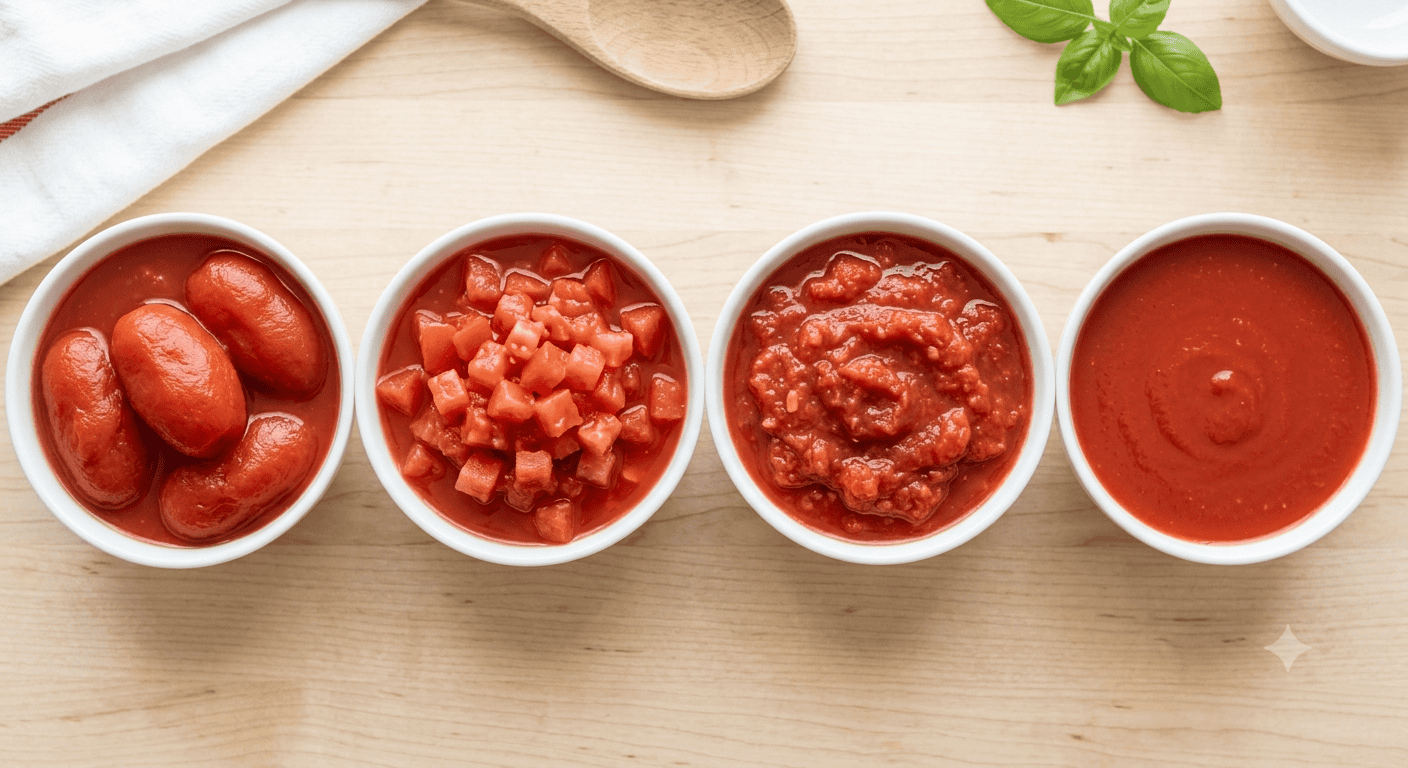
Whole Peeled Tomatoes
- What they are: Whole plum tomatoes that have been harvested at peak ripeness, peeled, and packed in a rich tomato juice.
- Best for: Long, slow-simmered authentic tomato sauces. As they cook, you can easily mash them with a wooden spoon or spatula, creating a rustic, artisanal texture.
Crushed Tomatoes
- What they are: Tomatoes that have already been crushed into a rough mixture of small pieces and thick puree.
- Best for: Quick pasta sauces, pizza bases, or any recipe where you want a thick sauce without having to manually break down whole tomatoes.
Diced Tomatoes
- What they are: Tomatoes chopped into uniform, distinct cubes.
- Key difference: During processing, diced tomatoes are usually treated with a small, safe amount of calcium chloride to help them retain their shape. Because of this, they won’t break down easily, even during long cooking times.
- Best for: Dishes where you want visible, firm tomato chunks, such as chili con carne, Mexican salsas, or chunky vegetable soups.
Pureed Tomatoes (Passata)
- What they are: Tomatoes that have been peeled, seeded, blended, and strained into a completely smooth, fluid liquid.
- Best for: Silky-smooth sauces, creamy tomato soups, or adding a rich tomato base to a dish without any seed or skin texture.
Tomato Paste
- What they are: Highly concentrated tomatoes cooked down for hours until almost all water evaporates.
- Key difference: It has a deep, intensely savory, and slightly sweet flavor. It is not meant to be eaten on its own.
- Best for: Acting as a “flavor bomb.” Frying a tablespoon or two with your aromatics (like onions and garlic) at the start of cooking adds incredible depth and a rich color to your dishes.
Tomato Sauce
- What they are: A fully cooked, pre-seasoned, ready-to-use sauce, often containing herbs like basil, oregano, garlic, and onion.
- Best for: The ultimate weekday shortcut. Just heat it up, toss it with your favorite pasta, and dinner is served.
2. Pro-Tip: The Ultimate Kitchen Shortcut
💡 The Versatility Hack: If you only have space to stock one type of canned tomato, always buy Whole Peeled Tomatoes. They are the least processed and the most adaptable. You can easily turn them into crushed tomatoes by mashing them in the pan, or run them through a kitchen blender to create a perfectly smooth puree.
3. Shelf Life & Storage Guide
Because tomatoes are a high-acid food, their storage rules are slightly different from low-acid canned vegetables like corn or peas.
- Unopened Cans (Shelf Life): Generally, they carry a “Best-by” date of 12 to 18 months. However, as long as the can is stored in a cool, dry place and shows no signs of bulging, deep denting (especially on the seams), rusting, or leaking, the contents remain microbiologically safe for years. Over extended periods, the natural acid may slightly react with the lining, which can minorly alter the color or taste, but it remains safe to consume.
- Opened Cans: Never store an open metal can in the fridge. Once exposed to air, the acidity accelerates oxidation on the inner tin lining, which can impart a metallic taste to the food. Instead, transfer any leftover tomatoes into a glass or food-grade plastic airtight container. Keep it refrigerated and consume within 5 to 7 days.
4. Why Canned Beats Fresh (Most of the Time)
- Peak Ripeness: Tinned tomatoes are harvested and canned in the middle of summer when they are naturally sun-ripened and bursting with sugars and organic acids. Fresh supermarket tomatoes are often picked green and artificially ripened during transit.
- More Lycopene: The heating process used during canning breaks down the tomato’s cell walls, making lycopene (a powerful antioxidant) much easier for your body to absorb compared to raw fresh tomatoes.