In the global trade of canned tomato paste, a tin is never just a container—it is a highly engineered product designed for a specific market application.
For B2B importers, distributors, and procurement managers, selecting the right canned tomato paste sizes is only the first step. The physical size of the tin dictates the target customer, which in turn influences the optimal Brix concentration (thickness) and the ingredient formulation (100% pure vs. blended).
As a supply chain integrated manufacturer, navigating this complex matrix is what separates successful global distribution from stagnant inventory. Here is the ultimate guide to understanding how standard commercial sizes align with global markets, Brix levels, and ingredient profiles in 2026.
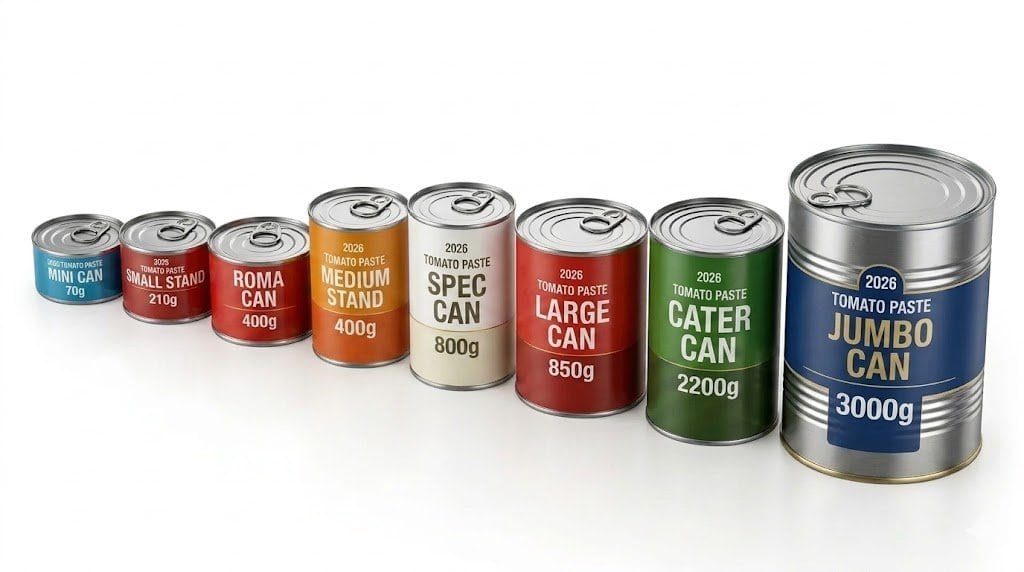
1. The FMCG Retail Sector: 70g, 210g, and 400g
These smaller capacities represent the fast-moving consumer goods (FMCG) side of the industry. They are designed for retail supermarket shelves, local grocers, and individual household use. Because home cooks typically use a few tablespoons per meal, these sizes prevent oxidation and food waste.
Target Markets & Customer Profile
- 70g (2.5 oz): An absolute powerhouse size in emerging markets, particularly across Africa and the Middle East. It represents a “single-use” portion perfectly suited for daily family stews without the need for refrigeration of leftovers.
- 210g (7.4 oz) & 400g (14 oz): The global retail standards. The 400g size is ubiquitous in European and American supermarkets for weekend meal preps.
The Brix & Ingredient Strategy
Because retail consumers are highly price-sensitive, this category sees the widest variation in formulation:
- Ingredients: In premium Western markets, these tins contain 100% pure tomato paste. However, in cost-sensitive regional markets (especially for the 70g size), buyers often request Blended Formulas (e.g., 25% tomato paste blended with modified starches and dietary fibers) to maintain an affordable shelf price while delivering excellent visual thickness.
- Brix: Typically formulated at 22-24% Brix for standard retail, or 28-30% Brix for premium “double concentrated” supermarket labels.
2. The Mid-Size Food Service (HORECA): 800g, 830g, and 850g
When moving into the HORECA (Hotels, Restaurants, and Cafés) sector, the procurement logic shifts from price-per-tin to performance-per-service. These sizes are the daily workhorses for professional kitchens.
(Note: The variance between 800g, 830g, and 850g often comes down to regional net weight regulations and slight differences in headspace during the hot-filling process, utilizing the exact same physical can dimensions).
Target Markets & Customer Profile
These sizes are procured by regional food service distributors catering to local pizzerias, mid-sized restaurants, and catering companies. A chef will typically open one or two 800g tins per dinner service to create fresh marinara or curry bases.
The Brix & Ingredient Strategy
Professional chefs are unforgiving when it comes to quality, meaning the formulation must be pristine:
- Ingredients: Exclusively 100% pure tomato paste. Restaurants cannot use starch-blended paste, as the artificial thickeners will break down, separate, or scorch when subjected to hours of simmering on a commercial stove.
- Brix: Strictly 28-30% Brix (Double Concentrated). Chefs require the highest yield possible. The thick, pure concentrate allows them to add their own water and stock, maximizing their culinary margins.
3. The Heavy Commercial & Institutional Class: 2200g, 3kg, and 4.5kg
For large-scale food consumption, efficiency is the only metric that matters. These massive heavy-duty cans reduce packaging waste, save labor time (opening fewer cans), and offer the best cost-per-kilo ratio in the global market.
Target Markets & Customer Profile
- 3kg (No. 10 Can) & 4.5kg: The ultimate B2B benchmark for institutional catering. These are purchased by major pizza franchises, hospital and school cafeterias, and commercial bakeries.
- 2200g: A highly efficient medium-bulk size popular in both heavy food service and wholesale cash-and-carry markets.
The “2200g + 70g” Promotional Strategy
In the competitive landscape of global wholesale distribution (particularly in the Middle East and African trade hubs), you will frequently see the “2200g + 70g” bundle. This is a powerful B2B marketing strategy engineered by integrated manufacturers. By shrink-wrapping a free 70g retail tin to the 2200g commercial can, regional distributors can incentivize bulk purchases, reward loyal restaurant buyers, and simultaneously introduce a retail sample into the local market.
The Brix & Ingredient Strategy
- Ingredients: 100% Pure Paste. Institutional buyers require a clean label to incorporate the paste into their own complex, large-scale recipes (like manufacturing BBQ sauce or ready-to-eat meals).
- Brix: 28-30% Brix is standard, though some mega-scale kitchens request 36-38% Brix (Cold Break) if they possess the heavy machinery required to pump and dilute such dense material.
Conclusion: Matching Specifications to Your Supply Chain
In the B2B tomato paste trade, simply asking for “canned tomato paste” is never enough. The true art of procurement lies in aligning the tin size, the Brix level, and the ingredient formula directly with the specific needs of your local consumer base.
A 70g starch-blended sachet dominates the retail stalls of West Africa, while a 100% pure 3kg No. 10 can drives the pizza franchises of Europe. By partnering with a versatile supply chain integrated manufacturer, importers can custom-engineer their procurement orders—whether that means packing high-Brix pure paste for HORECA distributors or designing aggressive promotional bundles like the 2200g+70g to capture new market share.
Looking for a Custom Size? Partner With a Direct Manufacturer
While the specifications listed above represent the most common commercial standards in the global market, our capabilities as a supply chain integrated manufacturer go far beyond standard catalog items.
We understand that distinct regional markets often demand highly specialized packaging solutions. Our production lines are highly flexible and engineered to accommodate a vast array of canning requirements. Whether you are ready to procure container loads of the standard sizes detailed above, or you require an entirely different tin size, a specialized Brix concentration, or a custom OEM formulation not listed here, we have the manufacturing capacity to deliver.
Ready to optimize your global procurement? Your supply chain shouldn’t be limited by standard options. If you have a purchasing demand for any canned tomato paste sizes, please reach out to our team. [Contact us today / Request a Quote] to discuss your exact specifications, private label requirements, and secure your factory-direct pricing.