Executive Summary: Creating premium pasta sauces, hearty stew bases, and rich rice toppings is a demanding culinary and industrial process. These applications require tomato paste to endure hours of boiling, mix with complex oils and spices, and ultimately cling perfectly to carbohydrates. For procurement and R&D directors, standard tomato paste often fails these stress tests. At Redora Food Company, we manufacture bulk tomato paste engineered specifically for heavy-duty simmering and sauce adhesion.
Before finalizing your next bulk contract for your sauce production lines, ensure your manufacturer can solve these four definitive R&D challenges.
1. Heat & Color Stability: Surviving the 2-Hour Boil
When producing stews or slow-cooked pasta sauces, the tomato paste must withstand prolonged thermal processing.
The R&D Reality: Procurement directors always ask: “Will the A/B color value survive a two-hour boil, or will it turn dark brown when mixed with heavy vegetable oils and spices?” Under prolonged heat, low-quality tomato paste rapidly undergoes the Maillard reaction (caramelization). When combined with complex oils and oxidative spices, the vibrant red sauce degrades into an unappetizing, muddy dark brown.
The Manufacturer’s Solution: We cultivate and process tomatoes with exceptionally high lycopene density and initial A/B values. Our controlled evaporation processes ensure that the cellular integrity of the pigment is fortified. This provides a massive “color buffer,” ensuring that even after rigorous, prolonged boiling in an oil-heavy matrix, your final sauce retains a rich, appetizing, and deep red glow.
2. Viscosity & Adhesion: The “Cling” Factor on Carbohydrates
Whether it is Italian spaghetti, Central Asian noodles, or rice bowls, the sauce must grip the food tightly. It cannot suffer from syneresis (water separating from the sauce).
The R&D Reality: The ultimate question for your supplier is: “What is the Bostwick index of your 28-30% Brix paste, and does your Hot Break capacity provide enough natural pectin to coat the food without adding massive amounts of artificial thickeners?”
The Manufacturer’s Solution: For pasta and stew applications, we strongly recommend our 28-30% Hot Break (HB) Tomato Paste. Unlike Cold Break, our Hot Break processing instantly deactivates pectinase enzymes, locking in the absolute maximum amount of natural pectin. This results in an incredibly low Bostwick index (high viscosity). Our HB paste creates a thick, robust network that naturally binds with water and fats. The result is a premium, velvety sauce that clings flawlessly to noodles and rice, allowing you to reduce your reliance on commercial starches.
3. Acidity & Flavor Balance: Protecting Your Sugar Budget
Pasta sauces and stews demand a rounded, savory, and umami-rich flavor profile.
The R&D Reality: If a batch of bulk tomato paste is overly acidic, it acts aggressively, piercing through the savory balance of the stew. To fix this, your R&D team is forced to dump expensive sugar into the vat to neutralize the sourness, directly inflating your production costs. Furthermore, chain restaurants demand absolute batch-to-batch flavor uniformity across different seasons.
The Manufacturer’s Solution: We meticulously control the pH and Titratable Acidity (TA) during our manufacturing process. We deliver a mild, perfectly balanced sweet-and-sour profile that enhances, rather than overpowers, your complex spice blends. By standardizing our acidity levels across all production runs, we guarantee that your formula remains consistent year-round, saving you significant costs on sugar and flavor correctors.
4. Compliance & Logistics: Securing the Global Supply Chain
Premium sauce bases often end up on family dinner tables or in high-end restaurant chains across Europe and the Middle East, markets with notoriously strict food safety regulations.
The R&D Reality: Top-tier buyers will ask: “Can your COA prove compliance with strict EU pesticide and heavy metal standards?” and “How do you guarantee your 220L aseptic bags won’t swell or burst during long ocean transits?”
The Manufacturer’s Solution:
- Uncompromising Compliance: We operate strictly under international quality management systems. Our bulk tomato paste is rigorously tested to ensure full compliance with the most stringent European limits for heavy metals, pesticide residues, and microbiological safety.
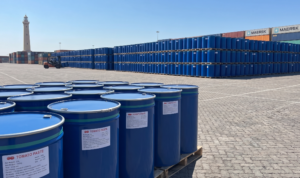
- Heavy-Duty Logistics: Shipping from major hubs like Tianjin Port, we utilize multi-layer, high-barrier aluminum foil aseptic bags housed in reinforced steel drums. Our automated filling and vacuum-sealing protocols completely eliminate the risk of internal fermentation or bag rupture during long-haul ocean freight, ensuring your cargo arrives in pristine, ready-to-use condition.
Partner With a Source Manufacturer That Understands Your Formula
Do not let thin sauces, browned colors, or regulatory failures disrupt your sauce production. Formulating premium pasta sauces and stews requires a manufacturer capable of delivering industrial-grade stability.
[ Contact the Redora Food Export Team ] Reach out today to discuss Bostwick parameters, request our technical data sheets (COA), and secure your supply of premium tomato paste.