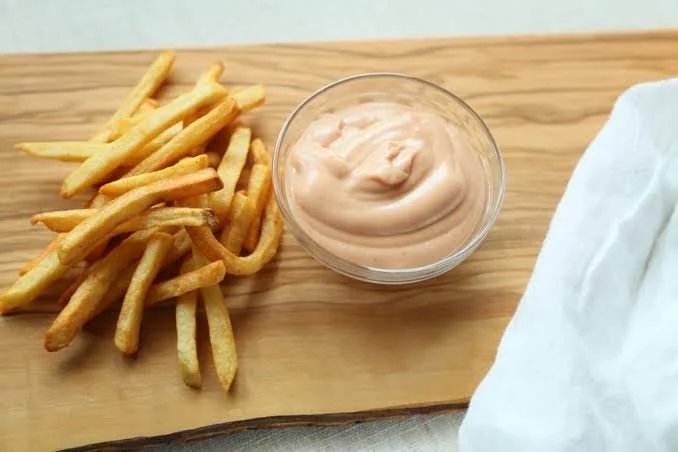
Executive Summary: Mayonnaise is an incredibly fragile oil-in-water (O/W) emulsion. Adding an external ingredient like tomato paste to create “Pink Sauce” (or Mayo-Ketchup) is like walking a tightrope. For procurement directors and R&D engineers, choosing a subpar tomato paste does not just affect the flavor—it can instantly shatter the emulsion, ruining entire batches. At Redora Food Company, we engineer our bulk tomato paste to seamlessly integrate into complex mayonnaise matrices.
Before formulating your next batch of Pink Sauce, ensure your tomato paste supplier can confidently answer these four critical technical challenges.
1. Emulsion Breakdown: The “Free Water” Threat
The most direct question an R&D engineer will ask is: “How much free water is in your paste? Will it cause my mayonnaise to separate?”
The R&D Reality: Mayonnaise relies on a delicate balance of oil suspended in water. If you introduce a tomato paste with poor water-locking capabilities (low Bostwick/weak cellular structure), the high-shear homogenization process will force that excess free water out. This instantly breaks the mayonnaise’s emulsion, resulting in a disastrous, grainy sauce with a layer of oil floating on the surface (syneresis).
The Manufacturer’s Solution: To protect your emulsion, we highly recommend our 36-38% Cold Break (CB) Tomato Paste. The high solids concentration allows manufacturers to introduce tomato flavor and color with relatively less water compared with lower-Brix paste. Cold Break processing can also be advantageous when a bright red color and fresher tomato profile are desired. Final emulsion stability, however, depends primarily on the complete formulation, emulsifier system, shear conditions, pH, and water balance.
2. Color Brightness: Avoiding the “Muddy” Pink
The visual appeal of Pink Sauce relies entirely on a bright, appetizing pastel pink or vibrant orange hue.
The R&D Reality: White mayonnaise acts as a ruthless magnifying glass for any color defects in your tomato paste. If your bulk paste has even a slight brown or caramelized tint (due to over-processing or heat damage), blending it with white mayonnaise will create a highly unappetizing, grayish “muddy” color.
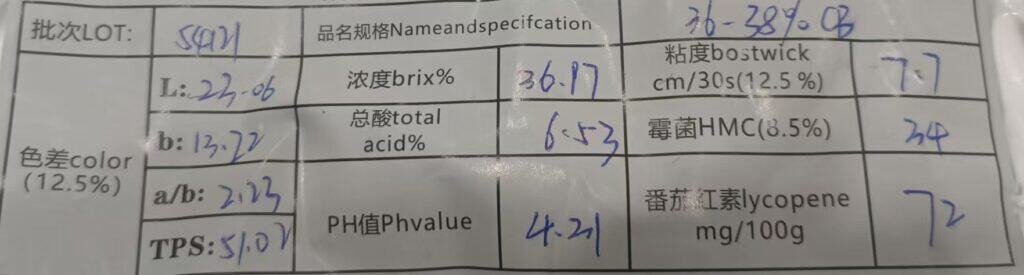
The Manufacturer’s Solution: You must demand an A/B color value of 2.1 or higher. Because we utilize the Cold Break (CB) process, our paste undergoes significantly less thermal stress, preserving the absolute maximum natural red pigmentation (lycopene). When blended into your mayonnaise, our high A/B value paste guarantees a consistently bright, vibrant, and premium pink finish across every single batch.
3. Acidity Overload: The Flavor Clash
A perfectly formulated Pink Sauce is creamy, rich, and mildly tangy.
The R&D Reality: Mayonnaise formulations already contain significant amounts of white vinegar or citric acid for flavor and microbial stability. If you blend in a highly acidic batch of tomato paste, the combined acidity will aggressively pierce through the creamy fat profile. The result is a harsh, overwhelmingly sour condiment that requires massive amounts of expensive sugar to balance out.
The Manufacturer’s Solution: We meticulously monitor the pH and Titratable Acidity (TA) during our vacuum concentration phase. Our paste delivers a mild, perfectly balanced sweet-and-sour profile. By controlling the acidity at the source, we ensure that the rich, fatty mouthfeel of your mayonnaise is enhanced, not destroyed—saving you significant costs on sugar and flavor correctors.
4. Winter Logistics: The Physical Integrity Challenge
For Eastern European and Russian buyers preparing for major spring exhibitions (such as Prodexpo in Moscow in February), winter shipping is a matter of life and death for emulsion sauces.
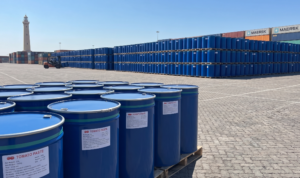
The R&D Reality: Physical consistency is everything when blending emulsions. If a 220L drum of tomato paste is exposed to deep freezing during winter transit, microscopic ice crystals will shred the cellular structure of the tomato pulp. Once thawed at your factory, the syneresis rate skyrockets. Even if the paste looks normal, using it will guarantee mayonnaise emulsion failure.
The Manufacturer’s Solution: Shipping to cold climates requires expert logistics. We utilize specialized cold-weather packing protocols, including high-barrier aseptic bags engineered for cold-flex resistance and thermal insulating blankets inside the shipping containers. We ensure that the paste arriving at your facility in February possesses the exact same structural integrity as the day it left our factory, ready for flawless homogenization.
Protect Your Emulsion with Professional-Grade Paste
Creating the perfect Pink Sauce requires ingredients that respect your delicate formulation. Do not let excess water, muddy colors, or winter frost destroy your mayonnaise emulsion.
[ Contact the Redora Food Export Team ] Reach out today to discuss technical data sheets (COA), pH specifications, and request free samples of our ultra-stable 36-38% Cold Break tomato paste for your condiment production line.