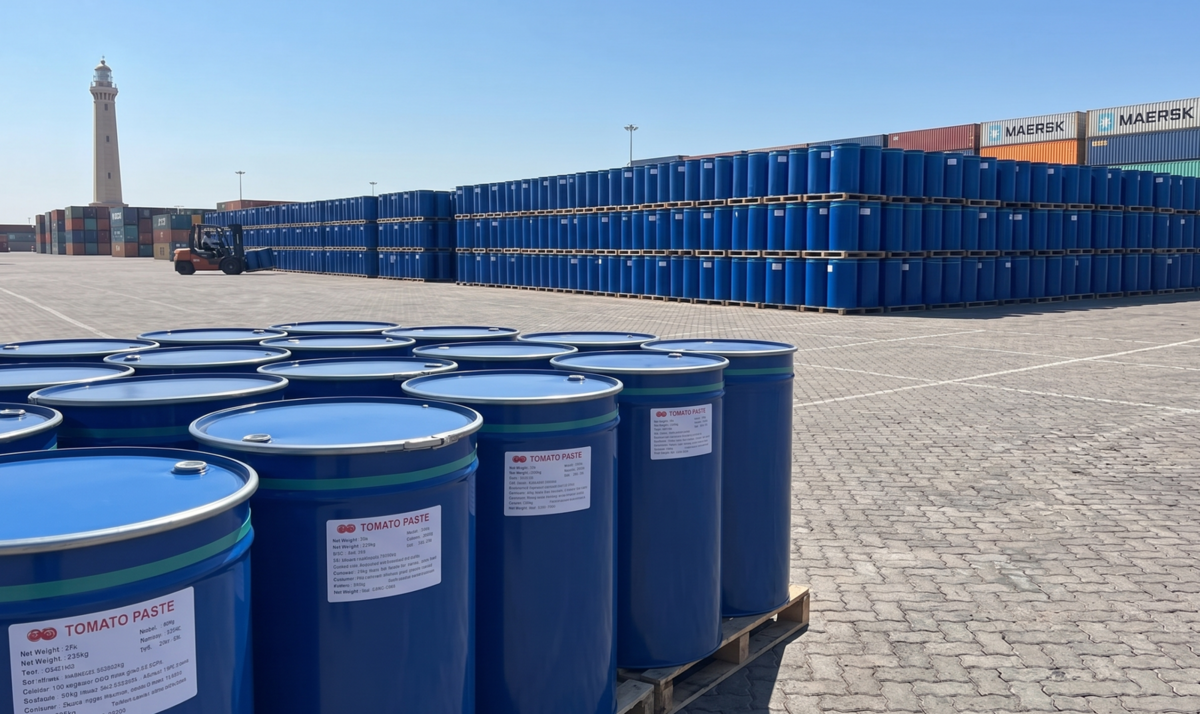
Executive Summary: When formulating complex condiments like Filipino Banana Ketchup or Thai-style Sweet Chili Sauce, R&D directors do not use tomato paste as the primary bulk ingredient. Instead, it plays a strategic role as a natural colorant and flavor catalyst. Because banana puree is naturally grayish-brown and sweet chili sauces require a translucent red glow, sourcing the wrong tomato paste can ruin the visual appeal and flavor balance of your final product.
At Redora Food Company, we understand that composite sauce manufacturers have uniquely strict requirements. Here are the four critical technical metrics you must demand from your tomato paste supplier when formulating Banana Ketchup and Sweet Chili Sauces.
1. Color & Stability: The “Natural Colorant” Challenge
For composite sauces, the primary job of tomato paste is to dye the entire batch a beautiful, appetizing red.
- The A/B Value Equation: You should strictly demand an A/B color value of 2.1 or 2.2+. The logic is simple: the higher the red pigmentation, the less tomato paste you need to add to your formula. This directly lowers your raw material costs per batch.
- Shelf-Life in Clear Glass: Sweet chili sauces are traditionally sold in transparent glass bottles, exposing the product to constant UV light on supermarket shelves. Furthermore, these sauces undergo secondary pasteurization. We ensure our paste retains high, stable lycopene levels that resist oxidation, preventing your beautiful red sauce from fading or turning an unappetizing brown over its shelf life.
2. Fineness & Impurity Control: The Translucent Sauce Dilemma
Sweet chili sauces have a translucent, gel-like consistency. In this environment, any microscopic impurity is magnified, and consumers may mistake it for contamination.
- Ultra-Fine Screen Sizes: Do not accept standard crushing. You must ask your supplier about their screen sizes. We utilize ultra-fine 0.6mm to 0.8mm screens during the pulping process.
- Zero Black Spots & Skin Specks: Our fine filtration guarantees absolute purity—zero dark specks, zero seeds, and zero tomato skin fragments.
- Hydrocolloid Compatibility: Banana ketchup and sweet chili sauces rely heavily on thickeners like xanthan gum or modified starch. Our ultra-smooth paste blends seamlessly with these colloids, preventing gritty textures, clumping, or cloudiness in your final gel matrix.
3. Flavor Profile: Playing the Perfect Supporting Role
In these recipes, the tomato paste must provide a gentle tangy backbone without stealing the spotlight. The star of the show must remain the natural banana aroma or the direct heat of the chili.
- Optimizing the pH Balance: We strictly monitor the natural pH and titratable acidity of our paste. If a bulk paste is too acidic, your R&D team will be forced to add excessive amounts of expensive white sugar just to mask the sourness. A mild, balanced paste keeps your sugar procurement costs in check.
- Clean Tasting Notes: Through precise vacuum evaporation, we eliminate any harsh raw green notes, metallic tastes, or burnt caramel flavors. Our paste delivers a clean, subtle tomato profile that elevates—rather than overpowers—your complex spice blends.
4. Brix vs. Cost: The High-Concentration Economic Strategy
When you are primarily buying tomato paste for “color extraction,” which specification should you choose? Should you buy standard 28-30% Brix or upgrade to 36-38% Brix (Cold Break)?
For composite sauce manufacturers, we highly recommend evaluating the 36-38% Brix option.
- Maximum Lycopene Density: Higher Brix means significantly less water and a much denser concentration of red pigment.
- The ROI of Less Volume: Because the coloring power is so concentrated, you use drastically less volume per batch. This not only speeds up your mixing process but significantly reduces your landed costs. Shipping 36-38% Brix paste from our Tianjin Port facilities means you are paying ocean freight and customs duties for pure active ingredients, not water.
Upgrade Your Composite Sauce Supply Chain
Manufacturing premium Banana Ketchup and Sweet Chili Sauce requires ingredients engineered for precision. Do not settle for generic paste that compromises your product’s clarity, color, or cost-efficiency.
[ Contact the Redora Food Export Team ] Reach out today for technical specification sheets (COA), free samples of our ultra-fine 36-38% Cold Break paste, and highly competitive global shipping rates.