
How is Canned Tomato Paste Made? The Complete Journey from Bulk Drums to Retail Tins
When consumers open a small tin of tomato paste, they often picture a rustic scene: tomatoes being harvested, crushed, and packed directly into that tiny can on the exact same afternoon. While this linear process does occur during the intense peak harvest season (typically late summer), the reality of global food manufacturing and year-round supply chains requires a much more sophisticated approach.
To guarantee stable pricing, prevent seasonal stockouts, and offer customized recipes for different global markets, modern canned tomato paste is primarily produced through a highly efficient two-stage process. It involves re-processing highly concentrated paste from massive 220L bulk aseptic drums and transforming it into the familiar commercial and retail tins.
As a supply chain integrated manufacturer, we maintain absolute control over every step of this transformation. Here is the comprehensive engineering process detailing how bulk drum tomato paste is extracted, standardized, sterilized, and hermetically sealed for the global market.
Step 1: Pumping and Extraction (Unloading the Aseptic Drums)
The secondary production journey begins in the temperature-controlled warehouse, where thousands of 220L heavy-duty steel drums are stored. These drums contain industrial-grade, ultra-concentrated tomato paste (often reaching 36-38% Brix). Inside the steel outer casing, the paste is securely protected by multi-layered aseptic bags that block out light and oxygen.
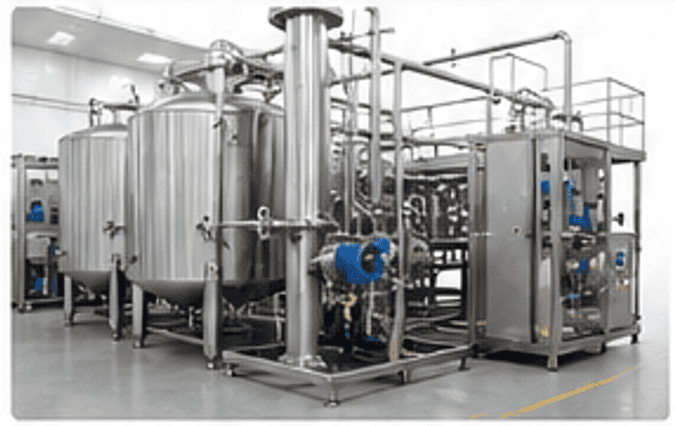
During the production run, these drums are transported to the pristine factory floor. Operators carefully open the aseptic bags in a highly sanitized environment. Because 36-38% Brix paste is incredibly dense and nearly solid, specialized high-viscosity pneumatic pumps are inserted directly into the bags. These powerful pumps extract the paste and transfer it through closed stainless-steel pipelines into massive mixing vats, minimizing any exposure to airborne contaminants or oxidation.
Step 2: Mixing and Standardization (The Customization Phase)
This stage is the beating heart of B2B manufacturing, as it allows for absolute flexibility in meeting specific regional demands. The raw drum paste is too concentrated for standard retail cooking, so it must be standardized (diluted) and formulated inside the high-capacity blending vats:
- Brix Adjustment for Pure Paste: For markets demanding 100% pure tomato paste, purified, UV-treated water is precisely metered into the vat. This lowers the concentration from the industrial 36-38% down to standard commercial levels, such as 28-30% Brix for catering or 22-24% Brix for retail supermarkets.
- Recipe Customization for Blends: If the target market requires a cost-effective “Tomato Blend” (such as the 25% tomato formulas popular in certain African and Asian markets), this is where the magic happens. Functional ingredients—including modified starches, dietary fibers, and localized seasonings—are meticulously folded into the tomato base. Powerful agitators ensure the starches are completely hydrated, creating a perfectly smooth, cohesive texture that will hold up beautifully in high-heat cooking.
Step 3: Pasteurization and Commercial Sterilization
Once the exact recipe and Brix level are achieved, the mixed product must be completely sterilized. Although the original paste in the drum was sterile, the physical process of pumping, diluting, and blending introduces a risk of microbial contamination.
The standardized paste is pumped through a continuous Tubular Heat Exchanger. Within seconds, the product is subjected to a rapid thermal shock, raising its temperature to high commercial sterilization levels (typically between 85°C and 95°C, or even higher depending on the specific gravity). This intense, controlled heat instantly eliminates any potential pathogens, yeasts, or spoilage bacteria. Crucially, because the heat exchange is so rapid, it sterilizes the product without burning the natural sugars or destroying the bright red lycopene pigment.
Step 4: Hot Filling and Hermetic Sealing
While the paste is still piping hot from the heat exchanger, it is pumped continuously into the automated filling carousels.
- Hot Filling: The empty tin cans are rapidly filled with the near-boiling paste. The residual heat of the product serves a dual purpose: it effectively sanitizes the inner walls of the empty can upon contact.
- Double Seaming: Immediately after filling, a specialized seaming machine drops a metal lid onto the can and folds the edges together in a tight “double seam.” This creates an impenetrable hermetic seal.
- The Vacuum Effect: Because the cans are sealed while the paste is hot and expanded, a physical reaction occurs as the product cools down later. The paste contracts, creating a powerful internal vacuum. This vacuum sucks the lid slightly inward, completely depriving any surviving anaerobic bacteria of oxygen and guaranteeing years of shelf stability.
Step 5: The Cooling Tunnel and Final Packaging
If the newly sealed cans remain hot for too long, the natural fructose inside the paste will begin to caramelize. This “stack burn” causes the paste to turn an unappetizing dark brown and develop a bitter, burnt flavor.
To prevent this, the cans are immediately conveyed through a massive Cooling Water Tunnel. High-pressure showers of cold water rapidly drop the core temperature of the cans, instantly halting the cooking process and locking in the vibrant crimson color and fresh aroma.
Finally, the dried, cooled cans pass through high-speed labeling machines. They are packed into heavy-duty cardboard master cartons, palletized, and shrink-wrapped—ready to be loaded into 20ft shipping containers and distributed to global buyers.
Conclusion: Engineering Quality for the Global Supply Chain
Understanding exactly how canned tomato paste is made—from the extraction of bulk aseptic drums to the precise engineering of the hermetic seal—is essential for any B2B buyer. It proves that the quality of the final product in the tin is not left to chance; it is the result of strict thermal controls, exact Brix standardization, and advanced automated packaging.
Whether you are sourcing a 100% pure 28-30% Brix paste for a European catering network or a customized 25% starch-blended formula for emerging retail markets, partnering with a supply chain integrated manufacturer ensures that every single can delivers absolute consistency, safety, and flavor.