When you flip over a tin to read the canned tomato paste ingredients, you might expect to see a universal standard. For many consumers and buyers, the assumption is simple: it’s just crushed, concentrated tomatoes.
However, in the global B2B food trade, the reality is much more complex and fascinating. The ingredient list of canned tomato paste is actually a reflection of regional market preferences, culinary habits, and economic strategies.
As a supply chain integrated manufacturer, we know that a “one-size-fits-all” recipe does not exist. From the strict 100% pure concentrates demanded by European markets to the highly customized, starch-blended formulas popular in parts of Africa and Southeast Asia, here is the complete breakdown of what really goes into your canned tomato paste.
1. The Global Baseline: 100% Pure Canned Tomato Paste
In many Western markets and high-end culinary sectors, the standard for canned tomato paste ingredients is absolute purity.
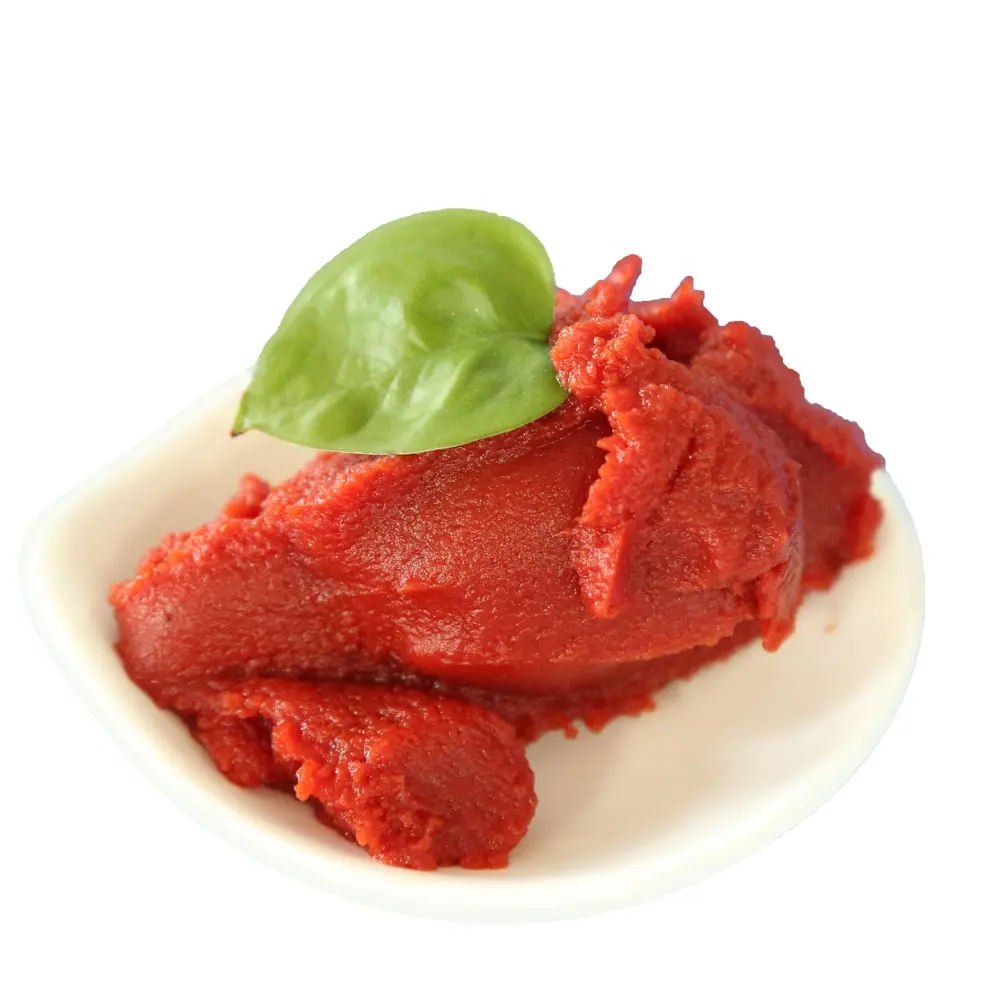
According to international Codex standards, true “Tomato Paste” must be derived entirely from the physical concentration of tomatoes, achieving a minimum Brix level (soluble solids) of 24%.
The 100% Pure Ingredient Profile:
- Tomatoes: The sole base ingredient. The thickness and flavor come entirely from evaporating up to 80% of the fruit’s natural water content.
- Naturally Occurring Compounds: Though not listed as separate ingredients, the paste is naturally packed with fruit sugars (fructose/glucose), citric acid (for a low pH and tangy flavor), and lycopene (the red pigment).
- Salt (Optional): Some retail formulations will add a trace amount of sodium for preservation and flavor enhancement, but industrial bulk paste is almost always unseasoned.
2. Regional Market Blends: The 25% Tomato Formula
If you step outside of markets that mandate the 100% pure standard, the ingredient list shifts dramatically to meet local consumer needs. In many emerging markets across Africa, the Middle East, and Southeast Asia, buyers prefer a product that balances rich color and thick texture with strict cost-efficiency.
In these regions, a very popular commercial product is the Tomato Paste Blend (often labeled locally as “Tomato Mix” or “Seasoned Tomato Sauce”). A standard formulation might use 25% pure tomato paste as the flavor base, while the remaining 75% consists of functional food ingredients.
A Typical Blended Ingredient List:
- Tomato Paste (e.g., 25% – 30%): Provides the core savory tomato flavor, aroma, and natural acidity.
- Water: Used to reconstitute the blend to the desired volume.
- Modified Starch: A crucial functional ingredient. Because the pure tomato content is lower, modified starch is added to replicate the high Bostwick consistency (thickness) of pure paste. It prevents water separation (syneresis) during high-heat cooking in local cuisines.
- Dietary Fibers: Added to enhance the “pulpy” mouthfeel and texture, making the blend mimic the physical structure of crushed tomatoes.
- Sugar & Salt: Added to balance the acidity and enhance the overall savory profile.
- Natural Food Colorings: Sometimes utilized to maintain that vibrant crimson red appearance.
3. Why Do Markets Choose Blended Ingredients?
The decision to formulate a canned tomato product with starch and fibers rather than 100% tomatoes is driven by highly strategic supply chain factors:
- Economic Accessibility: Pure 28-30% Brix tomato paste is an expensive commodity. By blending a 25% tomato base with high-quality starches, manufacturers can offer an affordable pantry staple to price-sensitive markets without sacrificing the visual appeal or cooking performance.
- Culinary Application: In many regional cuisines, tomato paste is used to thicken heavy stews and curries. Modified starch actually performs exceptionally well under prolonged boiling, keeping the stew thick and cohesive in ways that pure tomato pectin sometimes cannot.
- Tariff and Import Strategy: Different countries classify 100% pure tomato paste and “food preparations” (blends) under different HS Codes. Customizing the ingredients can often help importers navigate local tariff structures more efficiently.
4. Customizing Your B2B Sourcing Strategy
Understanding the difference in canned tomato paste ingredients is the key to successful global procurement.
As a buyer, you are not locked into a single recipe. A strong integrated manufacturer can adjust the ratio of pure tomato paste to functional starches and fibers based on your exact target market. Whether you need a premium 100% pure Cold Break paste for a European supermarket or a highly stable, cost-effective Tomato Mix for West African distribution, the ingredient list can be engineered to match your required price point and consistency.