In the international trade, food processing, and catering procurement of tomato products, we frequently encounter various professional terms and physicochemical indicators. Among them, concentration (Brix, i.e., soluble solid content) and density are the most critical data that determine product grade, logistics costs, and formula conversions.
Furthermore, due to translation nuances or everyday habits, many people easily confuse “Tomato Paste,” “Tomato Purée,” and “Ketchup.” This article will thoroughly clarify the fundamental differences between them and provide a practical reference guide for Brix and density.
I. Core Indicators: Density and Brix Correlation Table for Various Tomato Pastes
The density (specific gravity) of Tomato Paste depends directly on its concentration (Brix). The higher the concentration, the lower the water content, and the greater the density. (Note: The measurement temperature below is typically standardized at 20°C.)
| Product Category | Specification (Brix) | Common Uses & Scenarios | Approximate Density (kg/L or g/cm³) |
| Household / Light | 12% – 14% | Household canned goods, direct drinking, or cooking juice | ~1.05 – 1.06 |
| Industrial / Trade | 28% – 30% | Mainstream specification for bulk drum export, common raw material for reconstituted juice | ~1.12 – 1.13 |
| Industrial / Trade | 30% – 32% | B2B food processing raw material, catering bulk packaging | ~1.13 – 1.14 |
| Industrial / Trade | 36% – 38% | Ultra-high concentration for export (maximizes savings on ocean freight) | ~1.16 – 1.17 |
(Note: Actual density may fluctuate slightly depending on specific tomato varieties, origin climate, and measurement temperatures, but generally remains within the above ranges according to industrial standards.)
Accurately grasping this density data is crucial for logistics container loading calculations (to avoid container overweight fines) and for volume-based feeding calculations in food processing plants.
II. Concept Clarification: What is the Difference Between Tomato Purée and Ketchup?
Besides high-concentration Tomato Paste, there are two other easily confused tomato products on the market. Their concentration (Brix) and ingredients have strict industry distinctions:
1. Tomato Purée
- Concentration (Brix): The international standard is usually between 8% and 24% (products below 24% are generally not called Paste, but are classified as Purée). The most common tomato purée on the market is around 10% – 12%.
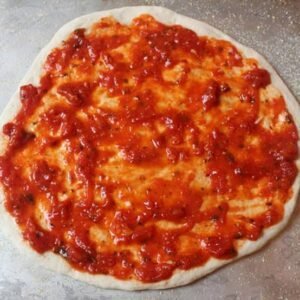
- Product Characteristics: It is made from pure simmered tomatoes without added sugar or salt. Its texture is thinner than industrial tomato paste but thicker than regular tomato juice.
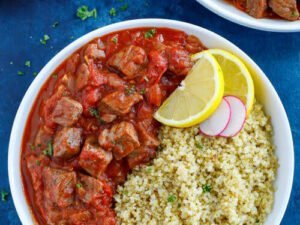
- Common Uses: It is primarily used as a cooking ingredient, often for making basic soup bases or pasta sauces in Western cuisine.
2. Ketchup (Tomato Sauce)
- Concentration (Brix): Usually between 25% and 33%, and sometimes even higher for premium products.
- Product Characteristics: Unlike the pure tomato products mentioned above, ketchup is a compound seasoning. Its high Brix value comes not only from the tomatoes themselves but also from large amounts of added sugar, vinegar, salt, and various spices.
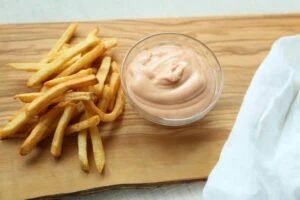
- Common Uses: It is an end product intended for direct consumer consumption (e.g., for dipping French fries or fried chicken in fast-food restaurants) and cannot be used as a bulk foundational ingredient for secondary cooking like tomato paste or purée.
Supplementary Reading
Want to learn more details about the texture, flavor, and processing techniques of different tomato products? Click the link below for an in-depth analysis: