Quick Answer
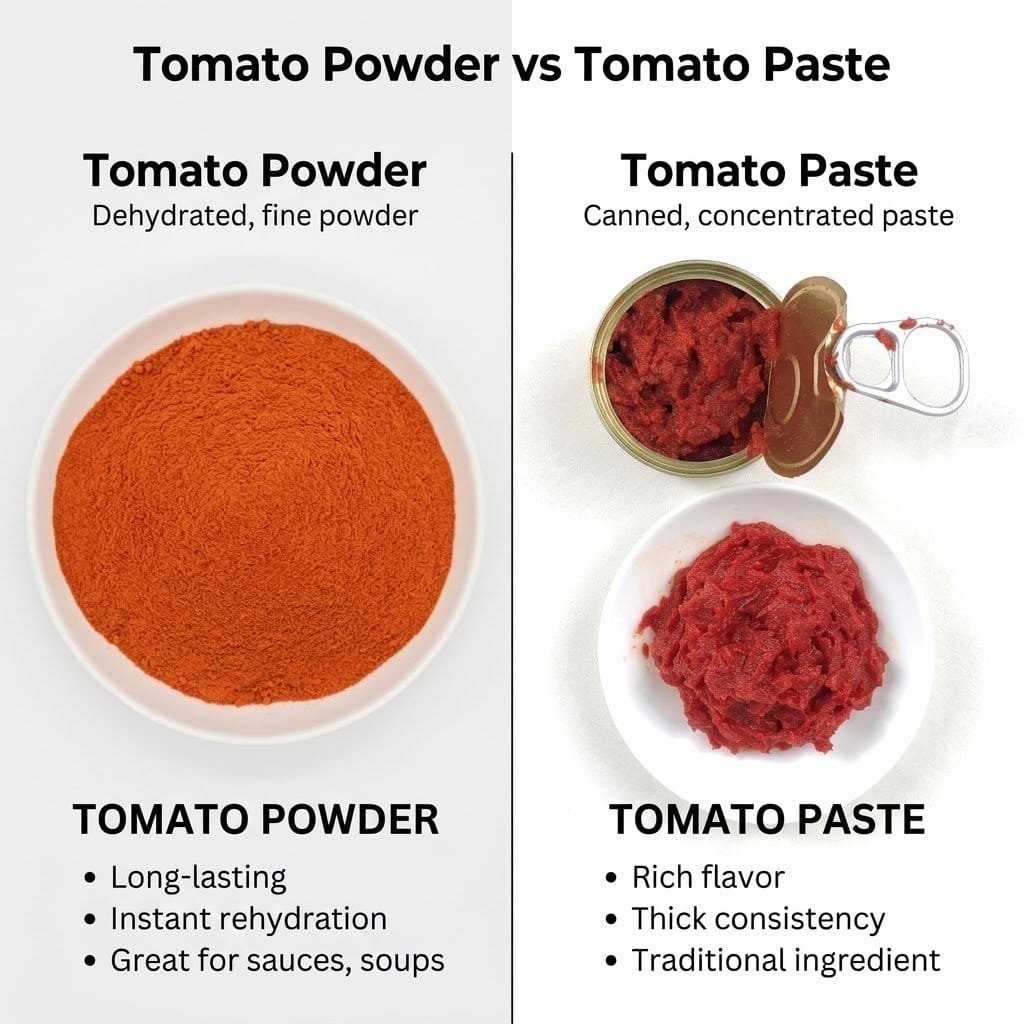
Although both tomato powder and tomato paste are made from tomatoes, they are fundamentally different products.
Tomato paste is a concentrated tomato ingredient with a thick texture and relatively high moisture content, while tomato powder is a dehydrated tomato product with very low moisture that exists in dry, free-flowing form.
As a result, they differ in physical state, manufacturing process, chemical properties, storage requirements, transportation costs, and industrial applications. The right choice depends on how the final product will be used.
What Is Tomato Paste?
Tomato paste is produced by washing, crushing, refining, and concentrating ripe tomatoes until a large portion of the water has been removed.
The result is a thick, smooth concentrate with a rich tomato flavor that is widely used throughout the food industry.
In the United States, the FDA defines tomato paste as a product containing not less than 24% tomato soluble solids, making it one of the most concentrated commercial tomato ingredients.
Common Uses of Tomato Paste
Tomato paste is commonly used to manufacture:
- Tomato ketchup
- Pizza sauce
- Pasta sauce
- Soups
- Cooking sauces
- Ready meals
- Canned foods
Because of its concentrated flavor and consistency, it serves as an important base ingredient for many processed foods.
What Is Tomato Powder?
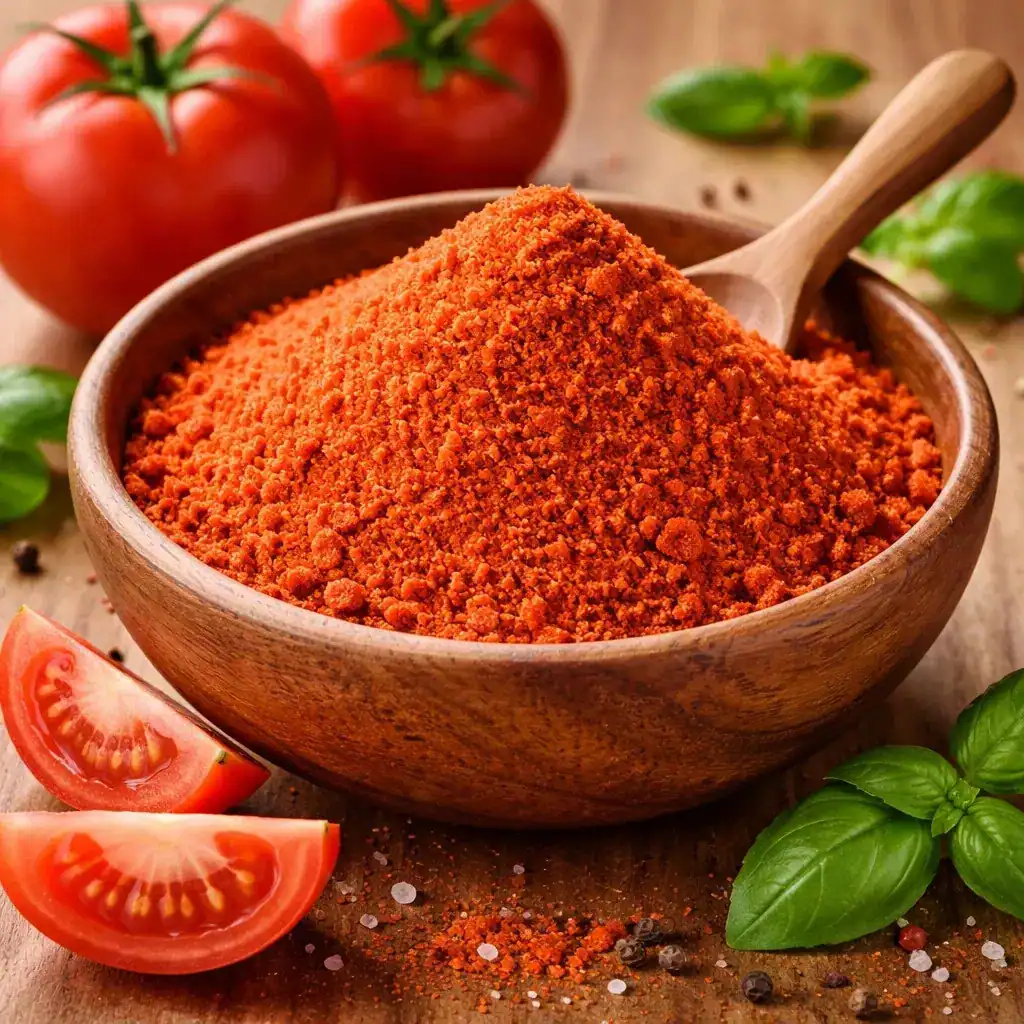
Tomato powder is a dehydrated tomato product manufactured by removing almost all moisture from tomato juice, tomato puree, or tomato paste and then grinding the dried material into a fine powder.
Unlike tomato paste, tomato powder contains very little water and can often be stored for extended periods under proper conditions.
Common Uses of Tomato Powder
Tomato powder is widely used in:
- Dry seasoning blends
- Instant soups
- Snack coatings
- Spice mixes
- Bakery products
- Instant noodles
- Dry food formulations
It can also be mixed with water to create a tomato base for certain recipes.
How Are They Made?
Although both products originate from fresh tomatoes, their production processes are quite different.
Tomato Paste Production Process
Fresh Tomatoes 🔜TWashing & Sorting🔜Crushing & Refining🔜Evaporation and Concentration🔜 Tomato Paste
Tomato Powder Production Process
Fresh Tomatoes 🔜Tomato Juice or Tomato Paste🔜Spray Drying or Drum Drying🔜Grinding🔜 Tomato Powder
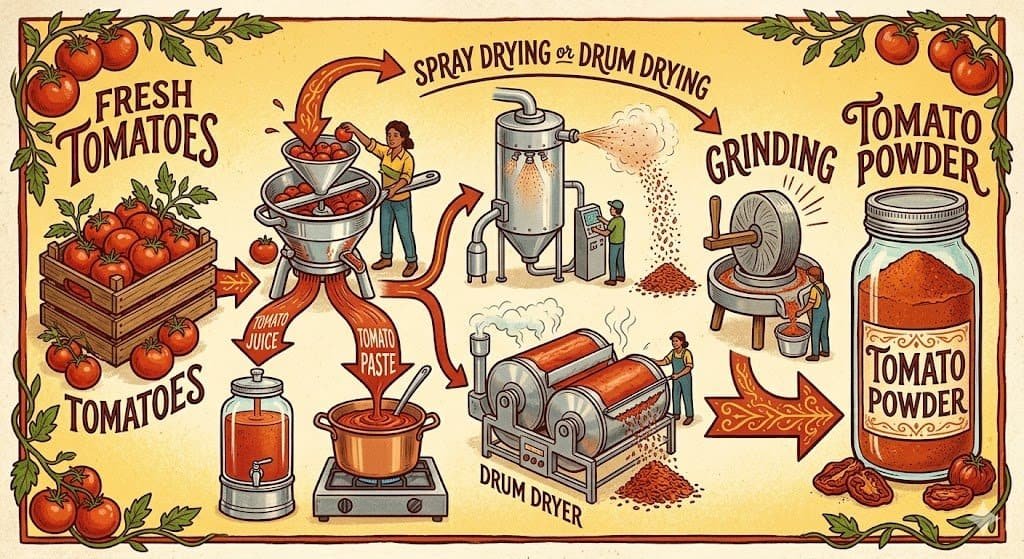
The additional drying stage is what transforms a concentrated tomato product into a stable powder with minimal moisture.
Tomato Powder vs Tomato Paste: Key Differences
1. Physical Form
The most obvious difference is their physical state.
- Tomato paste is thick, smooth, and semi-solid.
- Tomato powder is dry, lightweight, and free-flowing.
This difference affects packaging, handling, and manufacturing processes.
2. Moisture Content
Tomato paste still contains a considerable amount of water.
Tomato powder is almost completely dehydrated, resulting in much lower moisture content and lower water activity.
The reduced moisture contributes to improved storage stability and easier transportation.
3. Production Method
Tomato paste is produced through concentration.
Tomato powder requires an additional dehydration step, usually using spray drying or drum drying technology.
This creates a shelf-stable ingredient suitable for dry food applications.
4. Chemical Composition
Both products naturally contain beneficial tomato compounds, including:
- Lycopene
- Organic acids
- Natural sugars
- Minerals
- Various vitamins
However, their nutritional characteristics may differ because dehydration and heat processing can influence the stability of certain nutrients depending on the production technology used.
Tomato powder also has significantly lower water activity, making microbial growth less likely during storage.
Tomato Powder vs Tomato Paste Comparison Table
| Feature | Tomato Paste | Tomato Powder |
|---|---|---|
| Physical Form | Thick concentrate | Dry powder |
| Moisture Content | High | Very low |
| Production Method | Concentration | Drying and dehydration |
| Texture | Smooth and viscous | Free-flowing powder |
| Shelf Life | Typically 18–24 months | Often longer under dry storage |
| Packaging | Cans, pouches, aseptic drums | Moisture-proof bags or cartons |
| Transportation | Heavier due to water content | Lightweight and easier to transport |
| Reconstitution | Ready to use | Can be mixed with water |
| Typical Applications | Sauces, ketchup, soups | Seasonings, instant foods, dry mixes |
Can Tomato Powder Replace Tomato Paste?
In some situations, yes.
Tomato powder can be mixed with water to produce a tomato base similar to tomato puree or diluted tomato paste.
However, because the products differ in texture, moisture, processing characteristics, and flavor concentration, they are not perfect substitutes in every recipe or industrial application.
Manufacturers should select the ingredient based on the formulation requirements of the final product.
Which One Is Better for Food Manufacturing?
Neither product is universally better—they simply serve different purposes.
Choose Tomato Paste If You Need:
- A thick tomato base
- Rich tomato flavor
- Sauce production
- Ketchup manufacturing
- Liquid or semi-liquid food processing
Choose Tomato Powder If You Need:
- Dry ingredient formulations
- Long shelf life
- Lightweight transportation
- Instant food production
- Seasoning or spice blends
Understanding these differences can help food manufacturers optimize production efficiency while reducing storage and logistics costs.
Frequently Asked Questions
Is tomato powder the same as tomato paste?
No. Tomato powder is a dehydrated product with very low moisture, while tomato paste is a concentrated tomato ingredient with a thick consistency.
Can tomato powder be converted into tomato paste?
In some cases, tomato powder can be mixed with water to create a tomato base, but the final properties may differ from commercially produced tomato paste.
Which product lasts longer?
Tomato powder generally has a longer shelf life because of its very low moisture content and reduced water activity when stored correctly.
Which product is easier to transport?
Tomato powder is lighter and occupies less shipping weight because it contains almost no water, making transportation and storage more efficient.
Conclusion
Although tomato powder and tomato paste are both derived from tomatoes, they are designed for different purposes.
Tomato paste is a concentrated, semi-solid ingredient used primarily in sauces and processed foods, while tomato powder is a dehydrated product intended for dry food formulations and applications requiring long shelf life and convenient storage.
If your product requires moisture, texture, and a rich tomato base, tomato paste is often the better choice. If you need a lightweight, shelf-stable ingredient for seasoning blends or instant foods, tomato powder offers greater flexibility and lower transportation costs.
Choosing between them ultimately depends on your manufacturing process and the requirements of the final product.