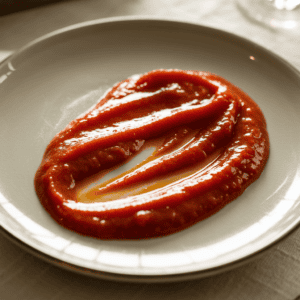
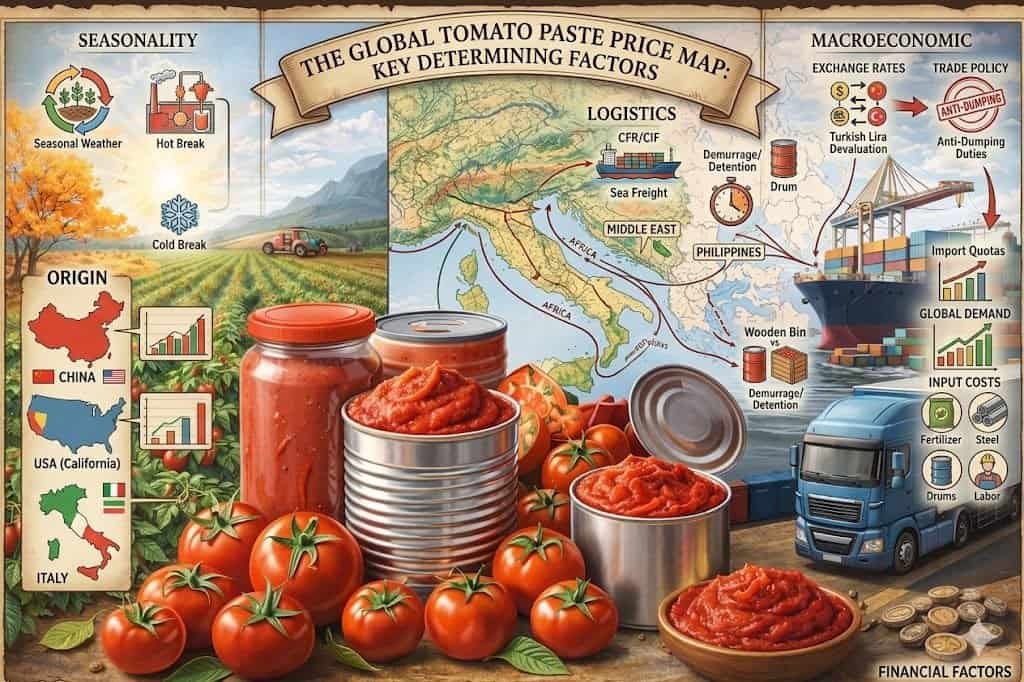
Tomato paste and its derivatives are among the most important raw materials in the global food industry. They are widely used in ketchup, sauces, canned foods, ready meals, soups and foodservice applications. Because industrial tomato products are heavily influenced by agriculture, processing technology, packaging systems and international logistics, their prices can fluctuate significantly from year to year.
For industrial buyers, understanding what truly drives tomato paste pricing is essential for procurement planning, formulation optimisation and long-term cost control.
Table of Contents
- Season and Weather Conditions
- Region of Origin and Global Market Positioning
- Production Volume and Global Supply Cycles
- Brix Concentration and Industrial Application Economics
- A/B Value, Colour Stability and Formulation Cost
- Hot Break vs Cold Break Processing
- Packaging Method and Packaging Cost
- Freight Cost and Global Logistics
- Exchange Rate and Currency Risk
- Conclusion
1. Season and Weather Conditions
Tomato is a highly seasonal agricultural product, and the harvesting and processing period is relatively fixed every year in major producing regions. Because industrial tomato paste production depends heavily on fresh tomato quality during the processing season, weather conditions directly affect both production cost and final market pricing.
Among all weather factors, prolonged rainfall and large-scale humid conditions can have a significant impact on industrial tomato processing. Excessive rain increases the water content inside fresh tomatoes, while reducing dry matter and negatively affecting colour performance such as A/B value. As a result, processors must use more fresh tomatoes and consume more evaporation energy to achieve the same Brix concentration. This directly increases production costs and eventually pushes tomato paste prices higher.
In industrial tomato processing, weather does not simply affect agricultural yield. It also influences processing efficiency, evaporation cost, colour stability and overall industrial yield, making seasonal conditions one of the most important pricing factors in the global tomato paste industry.
Why It Matters
Poor weather conditions can rapidly reduce industrial yield and significantly increase production cost during a single processing season.
2. Region of Origin and Global Market Positioning
Different tomato-producing regions have completely different market positions, cost structures and quality perceptions in the global tomato paste industry. Climate conditions, seed selection, cultivation systems, labour costs and processing standards all contribute to differences in pricing and product positioning.
Italy is widely regarded as one of the premium origins for tomato products. Italian tomato paste is strongly associated with strict cultivation standards, seed quality, traceability and premium food manufacturing. Products from Italy are often positioned toward higher-end European and retail markets where consistency and brand perception are extremely important.
China, particularly Xinjiang and Inner Mongolia, has become the global benchmark for large-volume industrial tomato paste production. Chinese production regions dominate the global bulk 28–30% Cold Break tomato paste market and are widely considered the price benchmark for international trade. In many cases, Chinese export quotations directly influence the baseline CFR pricing for Southeast Asia, the Middle East and African importing markets.
Because China combines large-scale production capacity, relatively competitive manufacturing cost and strong export capability, its market movements often play a decisive role in global industrial tomato paste pricing.
Why It Matters
Origin affects not only product quality, but also global benchmark pricing and international supply stability.
3. Production Volume and Global Supply Cycles
Tomato paste is a typical agricultural commodity product, meaning that global supply cycles have a major influence on market pricing. One of the most important factors affecting long-term price trends is total processing volume during each production season.
In practice, the previous year’s tomato paste price often affects growers’ planting willingness for the following season. When market prices remain weak and oversupply reduces farmer profitability, many growers reduce planting acreage in the next year. Lower planting volume then reduces raw tomato supply, which may trigger a sharp rebound in tomato paste pricing during the following processing season.
At the global level, total processing volume published by WPTC is considered one of the most important indicators for the tomato processing industry. When global processing volume exceeds approximately 45 million tonnes45\text{ million tonnes}45 million tonnes, the market often enters an oversupply cycle and pricing tends to move downward. However, when major producing regions suffer production losses and total global processing volume falls below approximately 40 million tonnes40\text{ million tonnes}40 million tonnes, the market can rapidly enter a supply panic cycle, causing export prices to rise sharply within a short period of time.
Because of this cyclical structure, industrial tomato paste pricing is influenced not only by immediate production cost, but also by long-term global supply expectations and market psychology.
Why It Matters
Global tomato paste pricing is heavily influenced by supply expectations and long-term commodity cycles.
4. Brix Concentration and Industrial Application Economics
Brix is one of the core technical and commercial indicators in industrial tomato paste. It represents the concentration of soluble solids within the product, primarily including natural sugars, soluble tomato solids and dry matter content. In the global tomato processing industry, the most common concentration ranges include 28–30 Brix, 30–32 Brix and 36–38 Brix.
However, in industrial applications, higher Brix does not automatically mean better product quality. Different concentration levels are designed for completely different processing systems, logistics structures and downstream formulation strategies. From a manufacturing perspective, the optimal Brix level depends less on “premium positioning” and more on transportation economics, target product requirements and local formulation behaviour.
Higher concentration products such as 36–38 Brix are widely used in export-oriented markets where freight efficiency and colour retention are critical. Major destinations include West Africa, North Africa, the Middle East, Russia and multinational repacking supply chains. In these markets, buyers are often highly sensitive to how much tomato dry matter can be transported per tonne of cargo. From a logistics perspective, higher Brix products improve freight efficiency because more tomato solids are shipped within the same container volume, reducing transportation cost per unit of usable tomato material.
In many of these regions, high-concentration tomato paste is not sold directly to consumers in its imported form. Instead, it is later diluted with water, reformulated and repacked into sachets, cans or small retail packaging formats. During this downstream processing stage, colour stability becomes extremely important because dilution can rapidly reduce visual redness and final product consistency. As a result, higher Brix products are often preferred not only for transportation efficiency, but also for their ability to maintain acceptable colour performance after dilution and secondary processing.
From a production standpoint, higher Brix tomato paste is naturally more expensive to manufacture. For the same quantity of fresh tomatoes, higher Brix concentration results in lower overall paste yield because significantly more water must be evaporated during processing. This increases evaporation energy consumption, processing time and factory operating cost per tonne of finished product.
However, from a formulation economics perspective, higher Brix products are not always more expensive in real industrial use. In some applications, they may reduce downstream cooking requirements, improve warehouse efficiency and lower total freight cost relative to the amount of usable tomato solids delivered to the factory.
By comparison, 28–30 Brix tomato paste is more commonly used in ketchup manufacturing, canned beans in tomato sauce, compound sauces and other highly cost-sensitive food applications. In many Southeast Asian markets such as the Philippines, buyers are often more focused on achieving the lowest possible finished-product cost rather than maximising raw material concentration or colour performance.
In these applications, manufacturers frequently adjust recipes through the addition of sugar, starch, stabilisers and other food additives in order to achieve the target sweetness, viscosity and appearance. Because of this, lower-cost tomato paste may still remain commercially competitive even when colour value or concentration is less ideal. In practice, the most economical industrial solution is rarely determined by Brix alone, but by the total formulation cost of the final food product.
Why It Matters
Industrial buyers evaluate not only tonne price, but also transportation efficiency, formulation cost and usable tomato solids.
5. A/B Value, Colour Stability and Formulation Cost
A/B value is one of the most important colour indicators in industrial tomato paste. In food manufacturing, colour directly affects consumer perception, product appearance and downstream formulation economics.
Higher A/B value indicates brighter and more stable red colour. Tomato paste with strong colour performance can reduce the need for additional colouring agents or recipe adjustments after dilution and thermal processing.
Lower A/B value products may appear darker or less vibrant after cooking, forcing manufacturers to increase dosage or add stabilisers in order to maintain acceptable appearance.
Brix Selection Guide for Tomato Products Based on Final Application
Why It Matters
Industrial buyers are often paying for colour stability and formulation efficiency rather than simply purchasing tomato solids.
6. Hot Break vs Cold Break Processing
Hot Break (HB) and Cold Break (CB) processing technologies also affect tomato paste pricing and downstream application performance.
Cold Break processing is typically performed at 65–75°C, allowing pectin enzymes to remain active briefly, resulting in brighter colour but lower viscosity. Hot Break processing operates at 85–100°C, rapidly deactivating enzymes and preserving more pectin structure, producing higher viscosity and stronger water-holding capacity.
Cold Break products are commonly used in banana ketchup, tomato juice and canned toma
to soup where bright colour is prioritised. Hot Break products are preferred for spaghetti sauce, pizza sauce and BBQ sauce where viscosity stability and reduced water separation are more important.
Why It Matters
Industrial buyers often face a trade-off between colour performance and viscosity stability during procurement.

7. Packaging Method and Packaging Cost
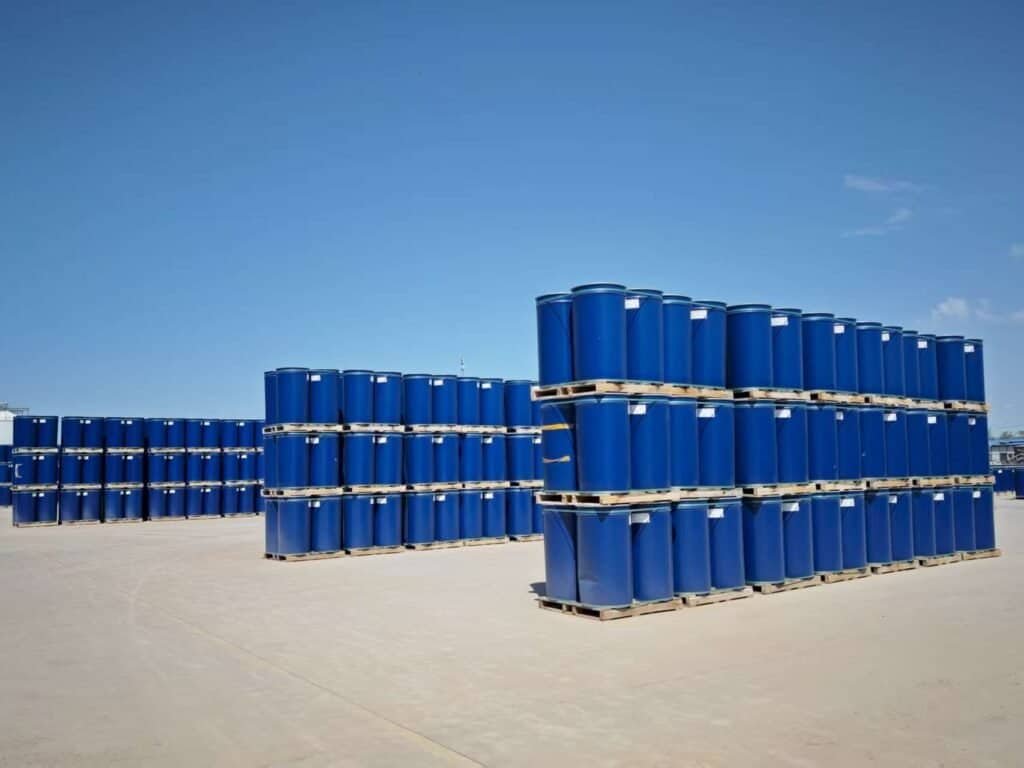
Packaging method is another important factor affecting tomato paste pricing because it directly influences transportation efficiency, packaging material cost and downstream processing economics. In the industrial tomato paste trade, the most common packaging formats include 220L aseptic drum packaging and small retail sachets or canned packaging. Among them, 220L aseptic bag-in-drum packaging is the most standardised format for bulk industrial transportation. Tomato paste is typically filled into sterile aseptic bags placed inside steel drums, allowing long-distance transportation and storage with relatively stable quality control. However, because steel drums are cylindrical or slightly oval-shaped, container space utilisation is not fully optimised, resulting in some wasted loading capacity during ocean freight. At the same time, used steel drums still retain recycling value in many markets, which can partially offset overall packaging costs.
By comparison, small retail packaging carries significantly higher packaging-related expenses. In many cases, packaging materials themselves may account for nearly 50% of the total finished product cost. Small sachet and canned tomato paste production also requires expensive high-speed multi-lane filling machines, secondary carton packaging and moisture-resistant inner liners. As a result, final pricing becomes highly sensitive to fluctuations in global aluminium, plastic and paper material costs. Unlike industrial steel drums, small retail packaging materials usually have very low recycling value, further increasing the overall packaging cost structure.
Why It Matters
In some retail products, packaging cost may exceed the value of the tomato paste itself.
8. Freight Cost and Global Logistics
Freight cost is another major factor influencing tomato paste pricing, especially in international bulk trade where transportation accounts for a significant portion of total landed cost. Since industrial tomato paste is generally a low-margin commodity product, fluctuations in ocean freight can rapidly affect export pricing and buyer procurement costs.
The main drivers behind freight cost increases include rising global fuel prices, destination port demurrage charges, geopolitical tensions and shipping route concentration. For example, geopolitical risks around critical maritime routes such as the Strait of Hormuz can significantly push global oil prices higher, directly increasing container shipping costs worldwide. In some export routes, freight rates from Tianjin Port to Tema increased from approximately 1,784 USD to 2,750 USD per container, representing an increase of more than 50%, even outside active war-zone shipping areas.
Because tomato paste is primarily traded as an industrial raw material with relatively thin profit margins, rising freight costs are often directly transferred into the final CFR price paid by importers, further pushing overall market prices upward. Seasonal shipping demand also plays an important role. Between September and December, global shipping capacity often becomes tighter due to the peak purchasing season for the United States market, reducing vessel availability and increasing freight rates for many export commodities, including tomato paste.
In addition, destination port demurrage and congestion charges can further increase total logistics expenses. During busy periods, delays in customs clearance, unloading and container return may create additional operational costs for importers and exporters, indirectly affecting the final market price of tomato paste products.
Why It Matters
Ocean freight fluctuations can significantly affect landed cost and global market competitiveness.
9. Exchange Rate and Currency Risk
Most international tomato paste transactions are settled in US dollars, making exchange-rate fluctuation a major pricing factor.
For Chinese exporters, RMB appreciation generally reduces export competitiveness because production cost becomes more expensive when converted into US dollars. During periods of exchange-rate volatility, exporters often increase quotation margins in order to reduce currency risk.
Because tomato paste trade usually involves payment cycles of one to three months, exchange-rate movements during this period can easily absorb already thin profit margins.
Why It Matters
Even small currency fluctuations can significantly affect exporter profitability in low-margin commodity markets.
Conclusion
Tomato paste pricing is influenced by a complex combination of agricultural production, processing technology, industrial formulation economics and global logistics. Factors such as weather conditions, origin, Brix concentration, colour performance, packaging systems, freight cost and exchange-rate fluctuation all play an important role in determining final market price.
For industrial buyers, understanding these interconnected factors is essential not only for cost control, but also for long-term supply-chain stability and product competitiveness in the global food industry.