
Choosing a drum tomato paste manufacturer involves more than comparing prices. Buyers also need to evaluate concentration, processing method, packaging, production documentation and the supplier’s ability to meet an agreed specification.
This guide introduces five companies to consider when sourcing drum tomato paste from China: COFCO Tunhe, Chalkis, Guannong Tomato, Wuyuan Kangguo and Redora Foods.
Editorial note: This guide is published by Redora Foods and includes our own offering. “Top 5” refers to an editorial shortlist, not an independently audited ranking by production capacity, quality or market share. Companies are presented in no particular order.
Quick Comparison
| Company | Published Product Focus | Useful Starting Point for Buyers |
|---|---|---|
| COFCO Tunhe Tomato | Bulk tomato paste and other processed tomato ingredients | Confirm the producing factory and specification for the proposed shipment |
| Chalkis | Drum tomato paste, including published cold break grades | Compare available concentration and drum specifications |
| Guannong Tomato | Drum paste with several Brix and processing options | Compare hot break and cold break requirements |
| Wuyuan Kangguo | Cold break paste in steel drums, alongside canned products | Evaluate its published cold break range |
| Redora Foods | Drum tomato paste across several concentration grades | Discuss product selection, samples and export requirements |
The summaries below explain the public information behind each selection. Product availability and commercial terms should be confirmed directly before ordering.
1. COFCO Tunhe Tomato
COFCO Tunhe Tomato is a Chinese processor of tomato and other fruit and vegetable products. Its published exhibitor profile lists bulk tomato paste, tomato powder, tomato oleoresin and canned tomato products among its offerings. A Philippine product registration also identifies COFCO Tunhe tomato paste packaged in steel drums. cfaa.cn
For buyers building a supplier shortlist, COFCO Tunhe is a relevant company to investigate for industrial tomato ingredients.
An enquiry should identify the required concentration, processing method and annual purchasing volume. Buyers should also establish which production facility will supply the order and request documentation for that specific facility and product.
Questions to ask:
- Which factory will produce or supply the proposed batch?
- What Brix and processing options are currently available?
- What are the net weight, pallet configuration and minimum order?
- Can the supplier provide a current specification and sample COA?
2. Chalkis
Chalkis describes a business covering tomato cultivation, processing, trade and product development. Its published drum product information lists 28–30% and 36–38% concentrations, with its company introduction identifying these as cold break options.
The drum packaging page specifies a 220L aseptic bag inside an iron drum, with approximately 240kg net weight per drum. These are the company’s published specifications and should be reconfirmed for the selected order. chalkis-tomato.com
Chalkis is worth evaluating when comparing cold break tomato paste for industrial use.
Buyers should request colour and consistency results under clearly stated test conditions, rather than making a selection based on concentration alone.
Questions to ask:
- Which cold break grades are available for the current crop?
- What are the agreed colour and Bostwick specifications?
- Does the quoted net weight apply to the selected grade?
- What storage conditions and shelf life apply?
Website: Chalkis
3. Guannong Tomato
Guannong Tomato publishes a detailed drum tomato paste range covering:
- 28–30% cold break or hot break
- 30–32% hot break
- 36–38% cold break
Its product page specifies 220L steel drums, a net weight range of 230–250kg per drum, and four drums per pallet. It also identifies an inner sterile bag and tomato processing operations. en.gntomato.com
The published range makes Guannong a useful candidate for buyers comparing different processing methods within one supplier’s portfolio.
The stated weight range also illustrates why buyers should confirm the actual filling weight for each quotation. Drum capacity alone does not establish the net quantity of paste supplied.
Questions to ask:
- Which grade matches the intended finished product?
- What is the exact net weight for that grade?
- What batch documentation accompanies the shipment?
- How many pallets and drums are included in the final loading plan?
Website: Guannong Tomato
4. Wuyuan Kangguo Tomato Products
Wuyuan Kangguo’s published company information lists 28–30% cold break and 36–38% cold break tomato paste in 220L aseptic bags with steel drum packaging. The company also lists a range of canned tomato paste sizes. kg168.com.cn
For purchasers seeking cold break paste, this provides a starting point for a product-specific enquiry.
Buyers should distinguish the requirements for bulk ingredients from those for finished retail products. Even when one supplier offers both, packaging, order quantities and production arrangements may differ.
Questions to ask:
- What are the current specifications for each cold break grade?
- Which legal entity and factory will fulfil the order?
- What is the confirmed drum filling weight?
- Can samples be supplied for formulation trials?
Website: Kangguo Tomato Products
5. Redora Foods
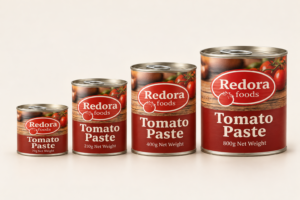
Redora Foods offers drum tomato paste options including 28–30 Brix, 30–32 Brix hot break and 36–38 Brix cold break. Its published range also includes 235kg drum packaging for bulk purchasing. redorafoods.com
Buyers can begin with the required concentration and application, then discuss the processing method, quality parameters and packaging.
When requesting a quotation from Redora, provide:
- Required Brix and hot break or cold break preference.
- Intended application and ingredient requirements.
- Target consistency and colour specifications.
- Order quantity, destination port and packaging requirements.
- Required samples, testing and shipment documents.
Explore the Redora drum tomato paste range or review the 235kg drum packaging option.
How to Compare Drum Tomato Paste Manufacturers
A useful comparison starts with a common purchasing specification. Sending different requirements to different companies makes their quotations difficult to evaluate.
Compare the Same Product Grade
Ask each company to quote the same concentration, processing method and ingredient composition.
Include the required testing conditions for consistency and colour. A numerical result without its measurement method may not provide a reliable basis for comparison.
Confirm Packaging and Shipment Quantities
Specify the net weight per drum, packaging construction and pallet requirements.
Ask for the total number of drums, total net weight and total gross weight in the proposed shipment. For example, an offer of 235kg per drum should not be treated as equivalent to 250kg per drum when comparing unit prices.
Review Documents for the Actual Supply
Request a product specification, a sample batch COA and relevant production-site documents.
Check that the company name, factory information, product description and batch references are consistent. A general company brochure does not replace documentation for the material being purchased.
Evaluate Samples in Your Process
Use samples to assess the paste in the intended recipe and equipment.
Consider flavour, colour, consistency, dilution behaviour and handling. The most suitable product is the one that meets the agreed application requirements consistently.
What to Include in Your First Enquiry
To receive a useful quotation, send suppliers a brief containing:
| Requirement | Details to Provide |
|---|---|
| Product | Drum tomato paste |
| Concentration | Required Brix range |
| Processing | Hot break or cold break |
| Quality | Required consistency, colour and other specifications |
| Packaging | Net weight, drum type and pallet preference |
| Volume | Trial order and expected repeat demand |
| Delivery | Destination port and requested shipping terms |
| Documentation | COA, origin documents and applicable certificates |
A clear enquiry helps suppliers identify a suitable product and explain any differences between their standard offering and your requirements.
For Redora product specifications and a quotation based on your purchasing brief: